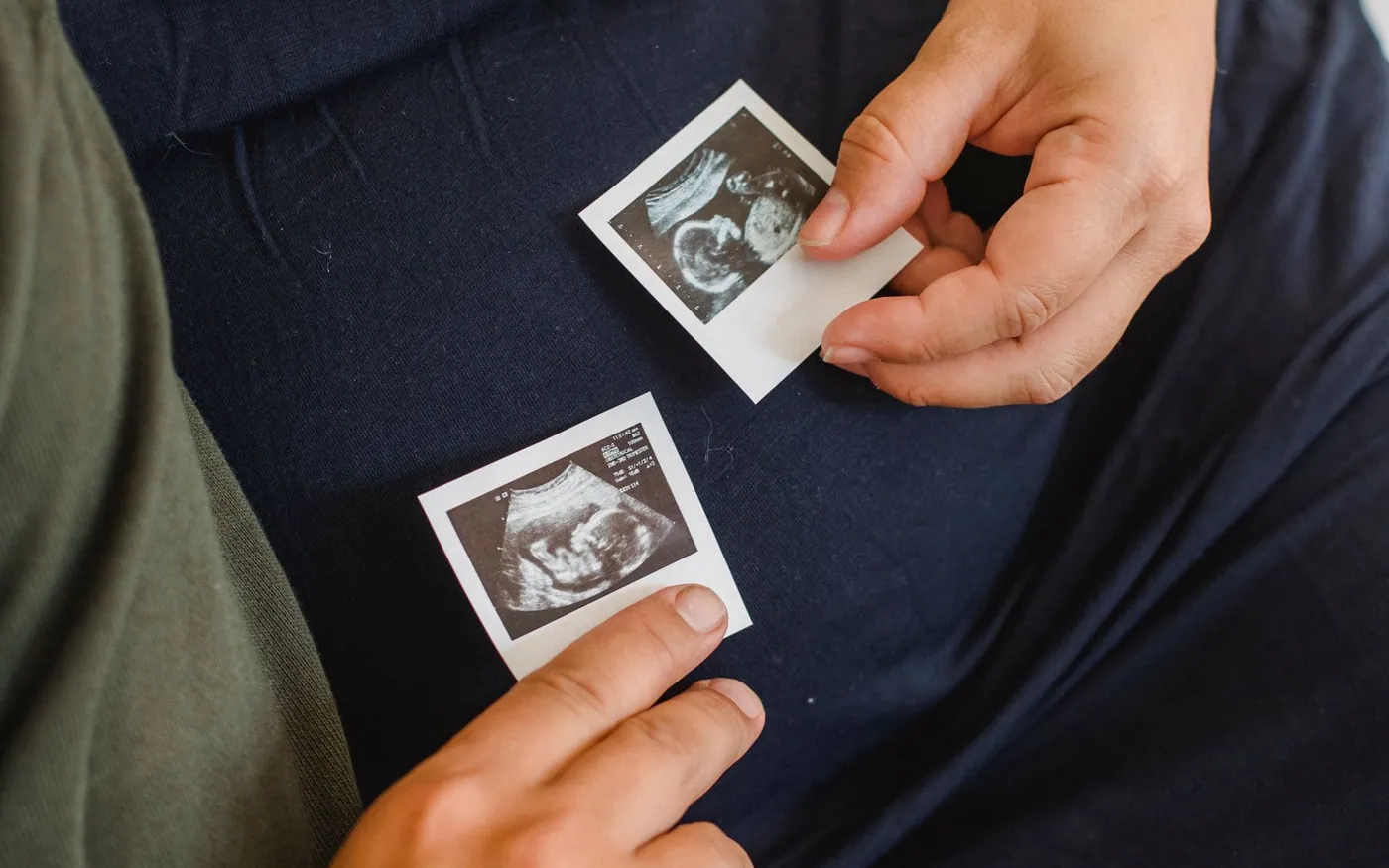
You may arrive with a positive test, many questions and very little certainty. That is not poor preparation. The appointment exists to clarify what is unknown, not to require an exact self-calculated gestational age or decisions about every test in advance. The most useful things to bring are an organized health history and a few questions you want answered before leaving.
The short version
- 01
Book early and describe symptoms when booking; urgent signs should not wait for a routine visit.
- 02
Not every first scan is conclusive or every first visit needs the same tests.
- 03
Before leaving, know which results are pending, who explains them and when to return.
Jump to the part you need
At booking, describe symptoms before discussing packages
Contact a care service when pregnancy is known rather than buying more tests before asking about an appointment. Mention the last menstrual period if remembered, whether cycles are regular, and any pain or bleeding. WHO places the first antenatal contact within the first 12 weeks, not as a reason to delay until that limit. The receiving service can advise timing based on your circumstances.
Severe pain, fainting, concerning shoulder-tip pain or heavy bleeding needs urgent assessment even without a pregnancy-confirmation document. Do not reserve those symptoms for questions at the booked visit. If you will leave the city shortly, say so early so the service can plan result reporting and handover. A useful first appointment needs a route into the next stage of care.
One page of history beats an unsorted bag of papers
List ongoing conditions, operations, allergies, prescribed and non-prescription medicines, and supplements; readable names or package photos can prevent confusion. Include previous pregnancies, births, losses or ectopic pregnancy where relevant. This helps the clinician understand care needs, not judge whether you have lived correctly. Mark uncertain details as unknown rather than supplying an answer that only sounds precise.
Include matters outside a laboratory report: poor sleep, anxiety, demanding work, limited support or difficulty understanding the consultation language. Bring a companion if wanted, and request private time if needed. Ask in advance about interpretation and any associated cost. A relative may help you remember, but should not have to improvise translations of decisions they do not understand either.
If you worry about forgetting symptoms, note onset, change over time and what concerns you most. You do not need an internet scoring scale or several days of entries before speaking. Saying nausea makes eating and work difficult may be more useful than saying your pregnancy differs from friends'. If symptoms become serious while waiting, seek appropriate urgent help rather than merely adding another diary entry.
Use documents to support care, not delay it
Ask the service about identification, an existing patient number, BHYT or private insurance, and earlier records. Another hospital's admission list does not automatically apply to this outpatient appointment. Recent results should include the report and date; an isolated photograph of a number may omit units or context. Do not send a complete medical history to an account whose relationship to the hospital is unconfirmed.
Do not fast on your own because you assume blood tests always require it. Ask whether a planned test needs special preparation, including drinking instructions for the intended scan. Bring medicines for review rather than independently withholding them. If nausea or fatigue makes the visit difficult, tell staff; attending care does not require pretending to tolerate more than you actually can.
The first scan may open further questions
Very early timing or uncertain dates can leave a scan unable to answer every question. Do not diagnose the pregnancy by comparing an absent image with what somebody else saw at a supposedly similar week. The clinician may need symptoms, tests or reassessment. Ask what is established, what remains uncertain and why a follow-up interval was chosen. A clear explanation matters more than vague reassurance.
If a transvaginal scan or intimate examination is proposed, ask its purpose, what happens, possible discomfort and how to signal that you want to stop. Discuss support or a chaperone within the facility's arrangements. Agreeing to an appointment is not advance agreement to every unexplained procedure. Mention previous difficult experiences to the extent you wish so the team can adapt communication.
Understand tests by purpose, not list length
Tu Du's information describes distinct purposes for pregnancy testing, including blood health, blood group, infections and fetal assessment. A first visit may begin with history, measurements and selected investigations; there is no identical first package for everyone. When screening is offered, ask whether it reports risk or establishes a diagnosis, and what choices follow a result that needs further assessment.
Try this conversation: Given my history, what should happen today? What can be scheduled later without missing a useful window? Please distinguish expected costs from optional services. These questions help direct time and money toward an understood purpose. You do not need to accept an additional test merely because declining feels difficult while you are sitting in an examination gown.
Before leaving: three things to make clear
First, what is known today and what is still uncertain? Second, which results are pending, who will explain them, and how? Third, when should you return, and which symptoms require contact sooner? Repeat the plan in your own words if helpful. If an app will deliver results, ask what to do when nothing arrives rather than interpreting silence as a normal finding.
Put the appointment where you actually keep your calendar, store the reports, and clarify medicine or supplement instructions with a professional if they remain unclear. The first visit need not remove every worry. It should establish where care is happening, what follows and who can receive the next question. That is a more useful foundation than a bag full of unexplained results.
If a companion attended, compare your understanding of the plan before leaving. One person may remember an immediate action while the other remembers an option to consider. Clarify the difference while contact is straightforward rather than debating it at home. Repeating the plan is not a memory test; it identifies unclear instructions before an appointment or medicine decision rests on something half heard.
Practical checklist
- A history page, medicine list and any subject for private discussion.
- Facility-specific documents and confirmed test-preparation instructions.
- Three questions covering findings, pending results and the return plan.
From the guide to your next step
How NIMO built this guide
NIMO writes and localizes each guide for Vietnamese families, then checks key facts against the official references below. The links support the guide; they are not the guide itself.
General health information · Checked against official sourcesFor symptoms or treatment decisions, confirm with an appropriate health professional.Next review · Dec 5, 2026