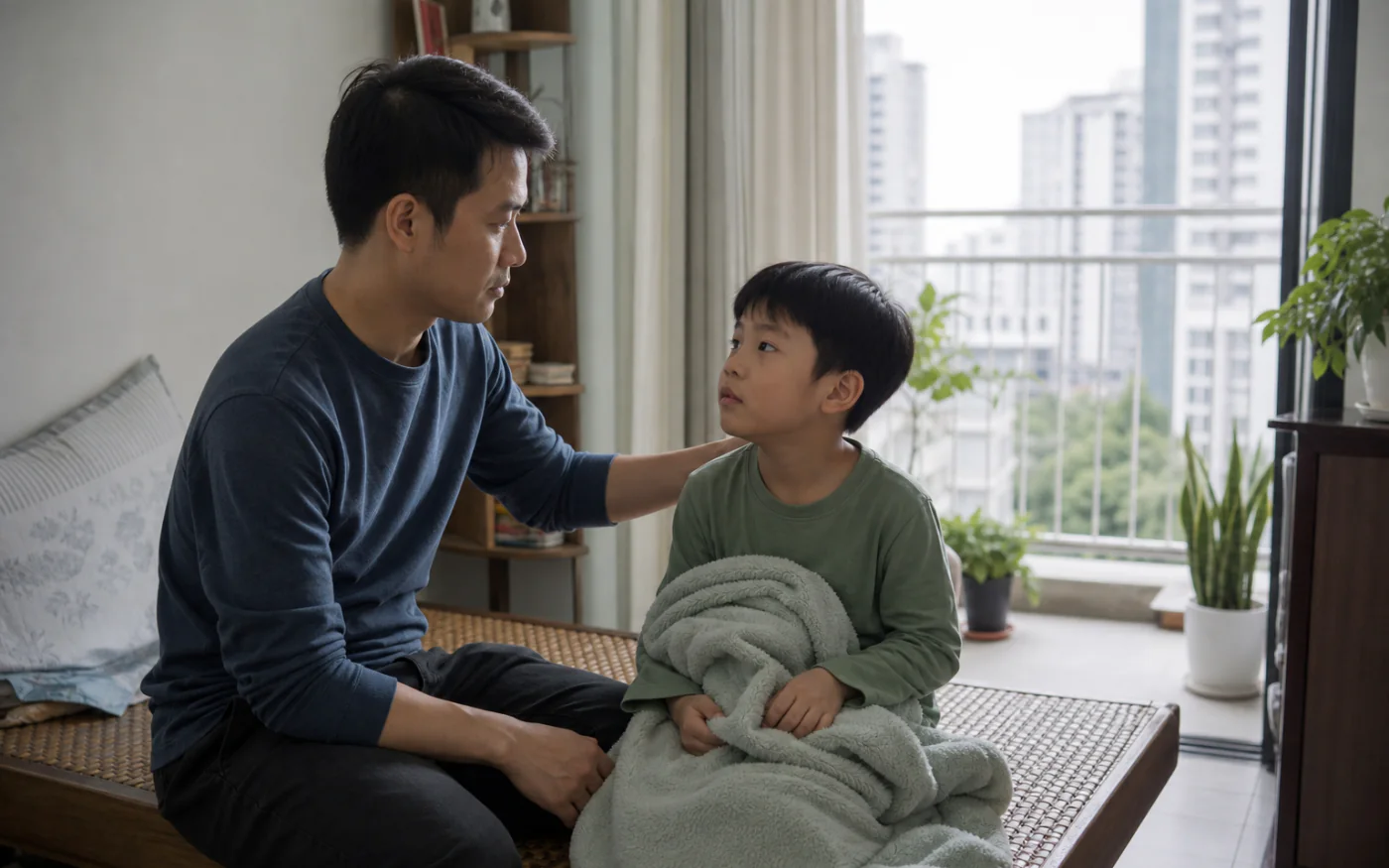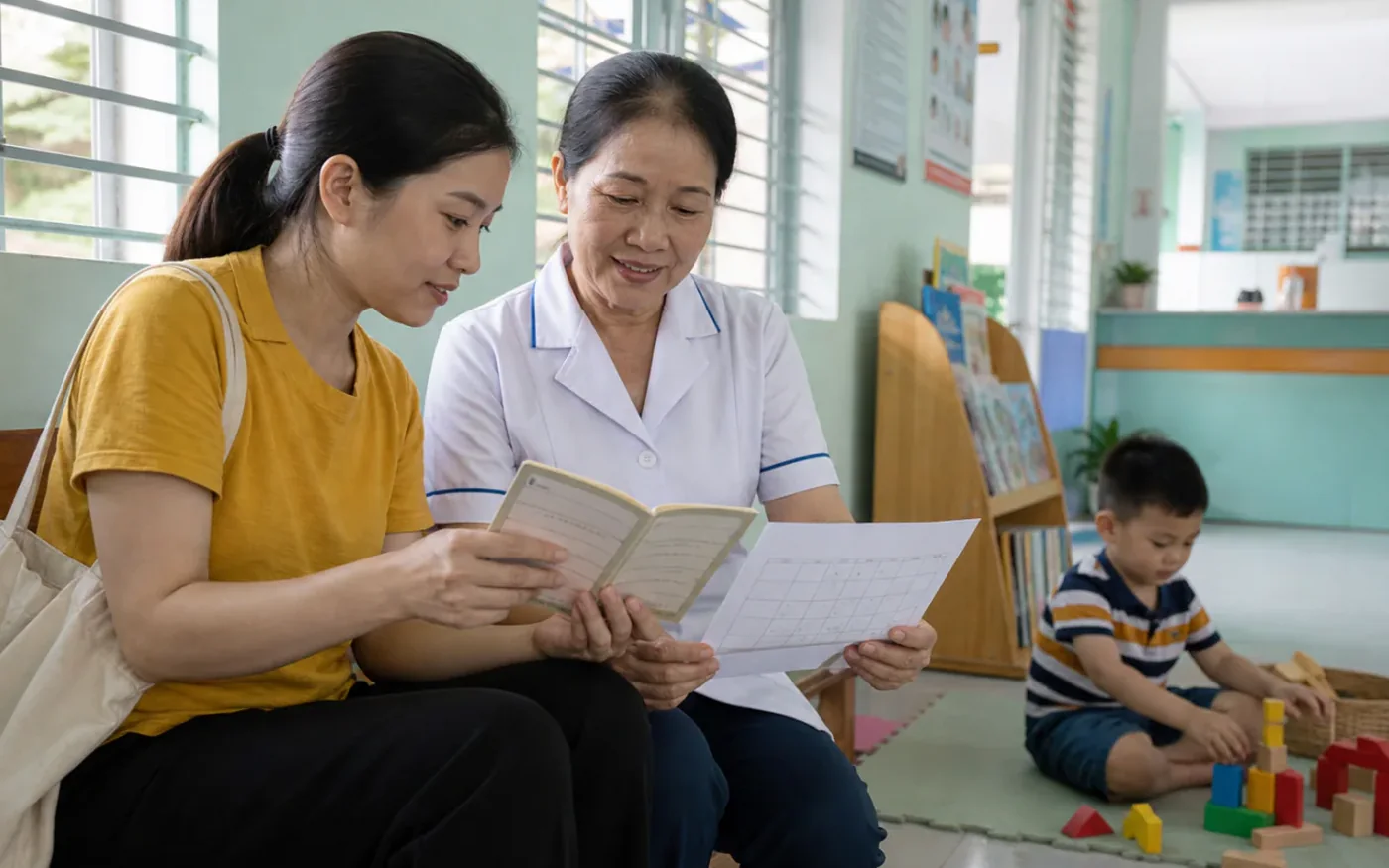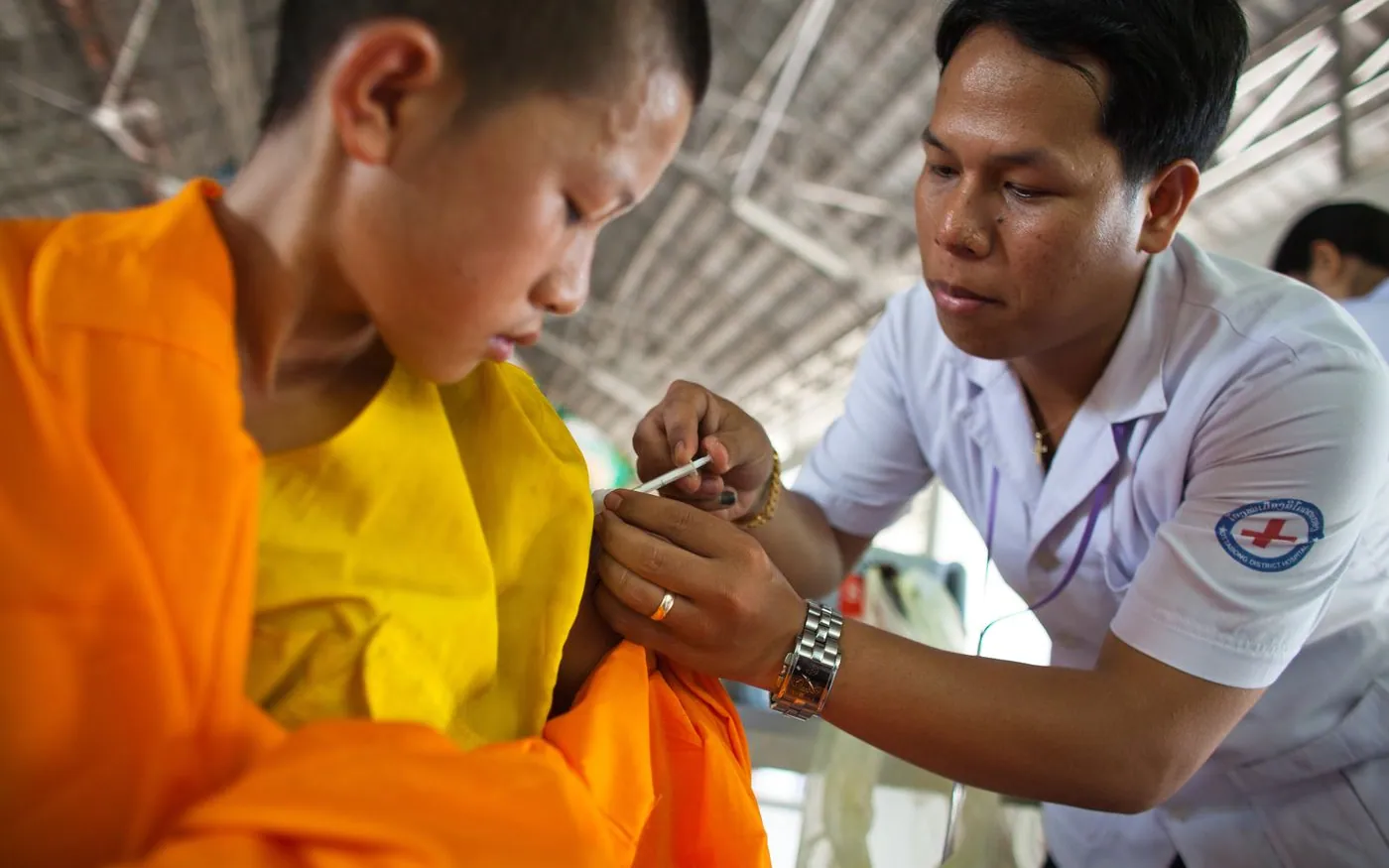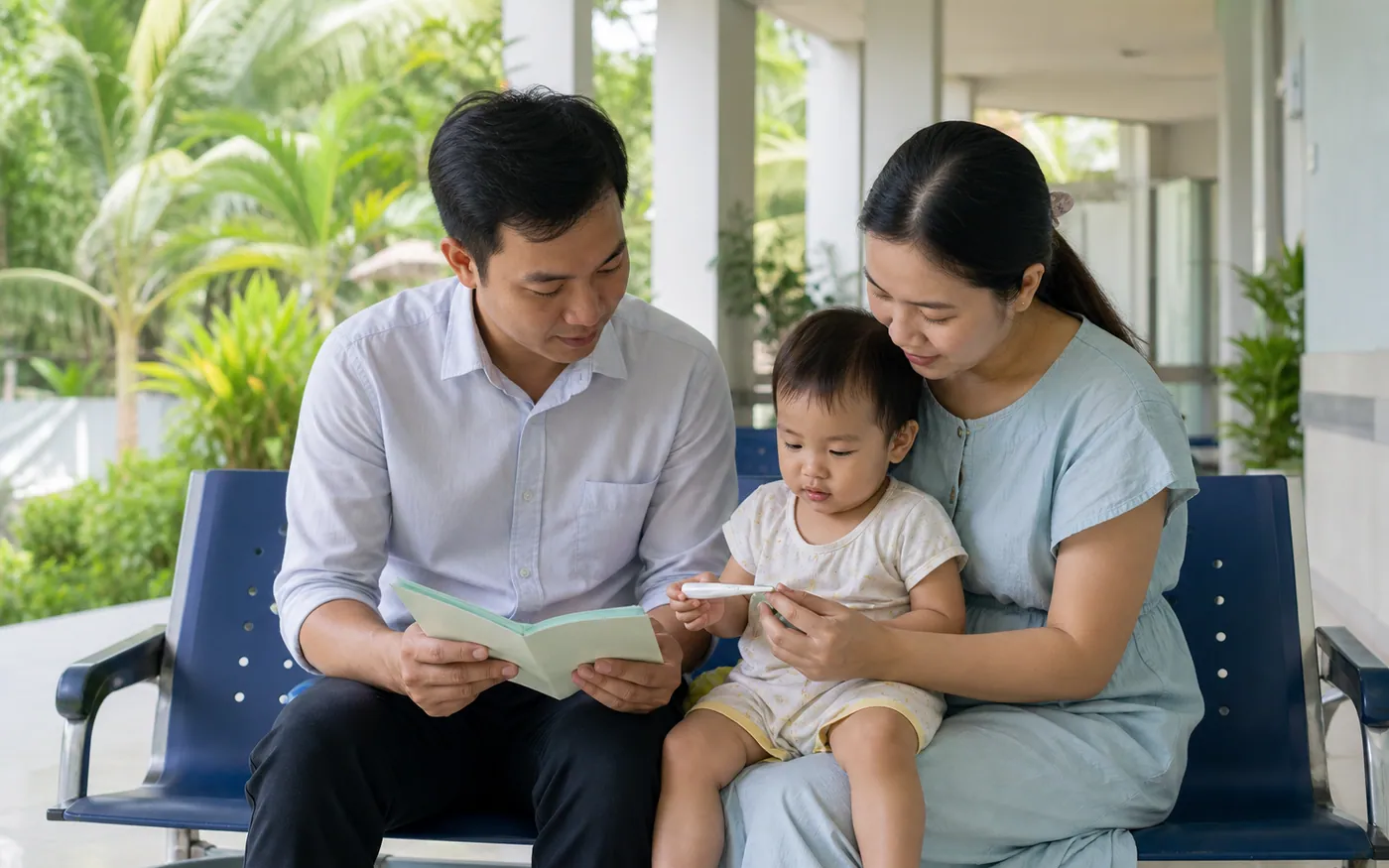
If your child is struggling to breathe, blue, having a seizure or difficult to wake, call 115 or seek the nearest emergency care rather than waiting for insurance papers or a specialist. For non-emergency care in Can Tho, the practical questions are whether review is needed today, which service to enter and what should happen afterwards. A useful visit brings the family home with an actionable plan, not only a receipt.
The short version
- 01
The child's urgency determines the route, not the cheapest or shortest queue.
- 02
Hospitals have different services and schedules; an open building does not mean every clinic is accepting patients.
- 03
Before going home, know what to do, what to await and what means returning sooner.
Jump to the part you need
Three levels of need, not three diagnoses
Emergency care addresses threatened vital functions even before a diagnosis is known. Same-day contact is appropriate for substantially reduced intake, less urine, fast breathing at rest or deterioration without obvious emergency signs; let medical staff triage. Scheduled follow-up suits a stable problem already under review. A child booked for next week who worsens today is not obliged to wait because an appointment slip says so.
Tell the clinician if reaching Can Tho involves a long journey. Advice that works near a hospital may need a different initial assessment location for a distant family. Severe signs should not be carried past nearby emergency care simply to reach a familiar hospital. Conversely, emergency care is not a shortcut for routine paperwork. Priority reflects clinical need rather than arrival order or distance travelled.
Read the Children's Hospital service lanes correctly
Can Tho Children's Hospital lists its address as 345 Nguyen Van Cu, An Binh Ward, Can Tho. Its published schedule separates general consultations, on-request care, vaccination and chronic-condition clinics. Those distinctions help you ask for the right reception point; they are not a guarantee of today's waiting time or availability. Keep the Vietnamese hospital name and street number in the destination to avoid similarly named services.
For a non-urgent visit, be specific: My child needs follow-up for an existing condition. Is that clinic accepting today, is booking required, and which desk should we use? Do not extrapolate one specialist's timetable to the whole department or paid-service hours to BHYT reception. Holidays can have separate notices. If booking is unavailable but the child is deteriorating, return to clinical triage rather than merely searching for an empty slot.
Bring a concise illness story
Start with age, the main symptom, onset and progression, then relevant conditions, allergies, medicines and results. A note saying Cough began early this week, drinking decreased today, and this is the medicine used can be more useful than undated photographs. Bring prescriptions or packaging rather than identifying medicines by colour. If the amount given is unknown, say so instead of supplying a number for completeness.
Pack for the child's actual wait: nappies, spare clothes, suitable feeds or food unless specific fasting instructions apply, and a familiar comfort item. Do not impose overnight fasting merely because a hospital visit might involve tests. Follow procedure-specific instructions if a procedure is booked, clarifying uncertainty beforehand. Keep BHYT, referral and appointment papers accessible, but missing them must not delay emergency treatment.
Know when to speak up in the waiting area
A child can change after registration. Worse feeding, breathing difficulty, drowsiness or increasing pain should be reported for reassessment rather than managed by guarding a queue number. Try: My child has changed since registration; could someone reassess the priority? Initial triage is not a guarantee for the whole morning. If unsure whom to approach, ask reception to connect you with clinical staff rather than relying on another waiting family's judgement.
If Vietnamese is difficult, say so at reception and ask about language support; do not assume English or Korean interpretation is always available. A trusted adult can help communication, but staff still need to explain medicine and emergency decisions clearly. Ask for a short written plan and repeat your understanding. An older child should not carry responsibility for interpreting complex medical information for the household.
Discuss coverage separately from clinical need
Ask the BHYT desk whether the child's information is confirmed, how this visit is registered and whether a referral or follow-up document is needed in this case. On-request care does not automatically mean everything, or nothing, is insured. Before a non-urgent service, ask what is expected to be covered, what is self-paid and why. Another family's invoice is not a price quotation for your child.
If data do not match or a card cannot be retrieved, ask for the resolution process, additional evidence and a contact. Clarifying this before a stable visit helps; taking an emergency patient home to fetch papers does not. Private or overseas insurance needs a separate discussion about direct billing versus reimbursement. BHYT procedures do not replace that policy. If paying upfront, obtain proper documents and next-step instructions, not only a photograph of the amount.
Leave with a plan the household can carry out
Before departure, clarify the diagnosis or working possibilities, medicine instructions, pending results and follow-up. With several medicines, have staff distinguish each and explain the measuring device rather than relying on syrup colour. Try: May I repeat the plan to make sure I understood? This reveals misunderstandings while help is available, particularly when the adult attending the visit is not the person giving evening medicines.
Finally, identify signs requiring return before the appointment and an after-hours contact route. If travel is difficult, say so the clinician can consider feasible follow-up. Keep the prescription, results, appointment and a brief caregiver handover together. A successful visit need not contain many tests or medicines. It should leave the family knowing what they are doing, what they are waiting for, and what must not wait.
Practical checklist
- Save the Vietnamese hospital name and exact street number.
- Bring current medicines or prescriptions, appointment and BHYT documents if available.
- Share the home plan with the next caregiver.
From the guide to your next step
How NIMO built this guide
NIMO writes and localizes each guide for Vietnamese families, then checks key facts against the official references below. The links support the guide; they are not the guide itself.
General health information · Checked against official sourcesFor symptoms or treatment decisions, confirm with an appropriate health professional.Next review · Dec 5, 2026