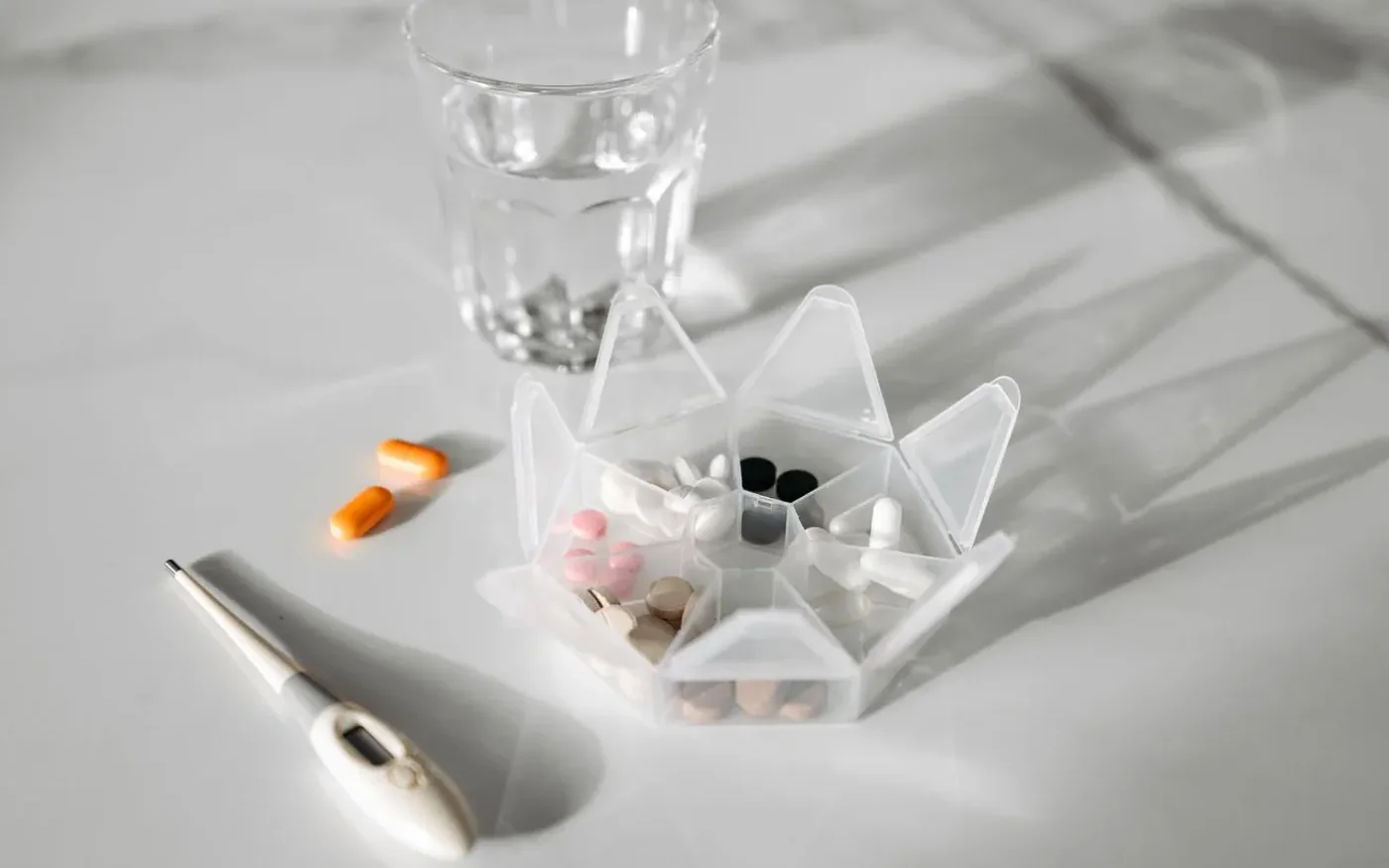
If a child may have swallowed medicine, a chemical or another potentially toxic substance, contact emergency care or a health professional now, even if the child is still playing normally. Call 115 immediately for breathing difficulty, seizures, collapse or difficulty waking. Do not induce vomiting or give activated charcoal or a drink as an improvised antidote. Keep the label or photograph packaging if safe, without delaying help to complete the information.
The short version
- 01
No immediate symptoms does not mean no risk.
- 02
Do not induce vomiting; first aid depends on the substance and exposure route.
- 03
Packaging, timing, the possible missing amount and the child's condition help professionals decide.
Jump to the part you need
Act on a possible exposure, not a perfect account
Young children may be unable to explain what they swallowed, and missing tablets cannot always be counted accurately. NHS notes that poisoning symptoms can be delayed. Do not wait for pain, vomiting or an admission before calling. An open blister pack, a spill near the mouth or an unidentified bottle warrants immediate advice rather than an experiment in watching until evening.
Remove the remaining substance from reach if safe and keep an adult with the child. If adults also feel unwell in a room with fumes or an unusual smell, get to safety rather than staying to investigate. Do not taste a substance, sniff a container closely or re-enter danger for evidence. The caller's safety is part of keeping help available for the child.
What the first call needs
Give age, estimated weight if known, product name and strength, possible exposure time and the amount that may be missing. Describe the route: swallowed, inhaled, in the eye or on skin. Explain alertness, breathing, vomiting or seizures and anything already done. Say when a detail is unknown rather than inventing a reassuringly small amount. Uncertainty is useful information too.
Take original packaging or a clear label photograph when directed to attend, not a substance decanted into a drinks bottle. Another adult can look up a medicine while you contact care; the inventory must not delay departure. In a shared home, consider grandparents' medicines, pill organizers and visitors' bags. A list of possibilities is better than confidently naming one substance without knowing.
Do not induce vomiting or improvise neutralization
Induced vomiting can bring material into the airway or cause further injury on the way back up; NHS and poison centers advise against doing it at home. Do not gag the child or use salt water, lemon or large amounts of milk as a universal remedy. Do not administer activated charcoal yourself: it is not suitable for every exposure and its use requires a professional decision.
For medicines or unidentified substances, give no additional food or drink before obtaining instructions; never force anything by mouth when alertness or swallowing is impaired. Some chemicals have specific oral first-aid directions, so read the exact label to the adviser instead of borrowing another product's rule. Ask directly whether anything should be given in this case, and follow the answer. Do not mix chemicals to neutralize acids or alkalis.
Eyes, skin and inhalation need different first aid
For a liquid chemical in the eye, begin immediate gentle irrigation with plenty of clean, comfortable-temperature water; the cited poison centers recommend 15 to 20 minutes. Do not add a neutralizing substance or wait to find eye drops. Have another adult call while irrigation starts if possible. Severe pain, vision change or corrosive exposure needs urgent assessment; rinsing does not replace it.
For liquid on skin, avoid exposing the helper, remove contaminated clothing when safe and start copious water rinsing while seeking substance-specific instructions. For inhaled fumes, move the child to fresh air only when the approach is safe; do not enter a gas-filled enclosed space without appropriate protection. Explain the environmental hazard when calling for help. Good first aid does not create another casualty.
A button battery is not a wait-and-see object
Suspected button-battery swallowing needs immediate emergency assessment, not a wait for symptoms or a stool check. The National Capital Poison Center warns that a battery lodged in the esophagus can injure rapidly while the child initially looks well. Bring an available battery code or device, but do not dismantle toys while delaying departure. If unsure whether the object was a coin or battery, state that uncertainty.
Battery protocols include measures that apply only under specific age, timing and swallowing conditions; they must not become a blanket honey remedy for every child. Obtain emergency instructions while arranging immediate attendance, without searching for ingredients or inducing vomiting. This article supplies no home battery-treatment dose or self-triage criteria. Locating the battery and arranging timely professional treatment remain the priorities.
Follow the observation plan, then change storage
If professional assessment allows home observation, ask how long, which symptoms require return and whom to call if anything changes. Different substances act on different timelines; a previous harmless incident is not a template. Keep exposure timing, instructions and packaging together. Reduced alertness, breathing difficulty or seizures at any point require 115 immediately, not waiting for a scheduled callback.
After the situation is stable, lock medicines and chemicals away, retain original labels and separate them from food. Check visitors' bags, bedside tables, pill organizers and accessible battery compartments, not just the main kitchen cupboard. Child-resistant does not mean child-proof. The aim is not impossible continuous vigilance over every object, but additional barriers so one busy moment does not become another exposure.
Practical checklist
- Get advice immediately; call 115 for emergency signs.
- Do not induce vomiting or give a home antidote.
- Keep product, timing and possible amount information.
- Do not wait for symptoms after suspected button-battery ingestion.
From the guide to your next step
How NIMO built this guide
NIMO writes and localizes each guide for Vietnamese families, then checks key facts against the official references below. The links support the guide; they are not the guide itself.
General health information · Checked against official sourcesFor symptoms or treatment decisions, confirm with an appropriate health professional.Next review · Dec 5, 2026