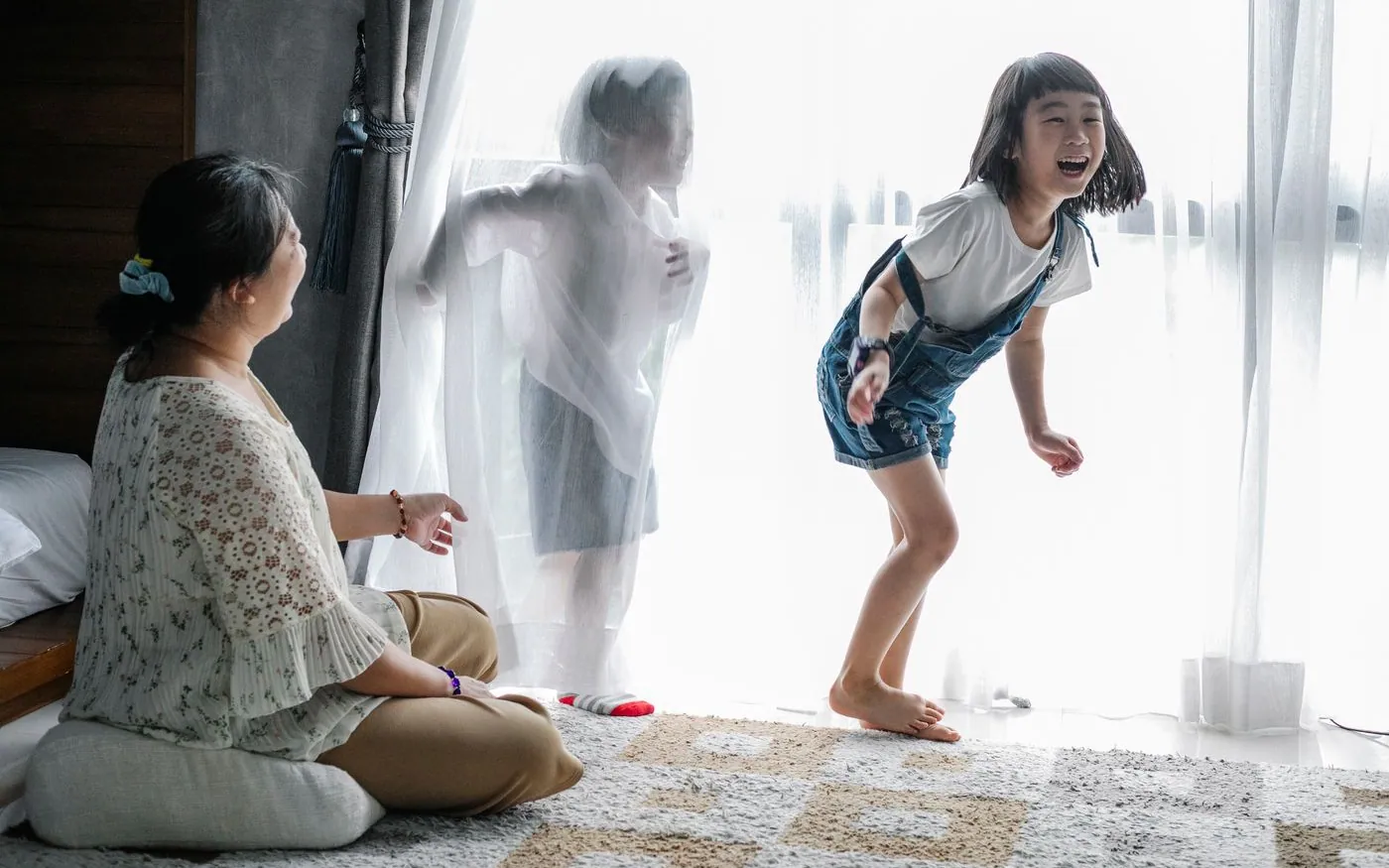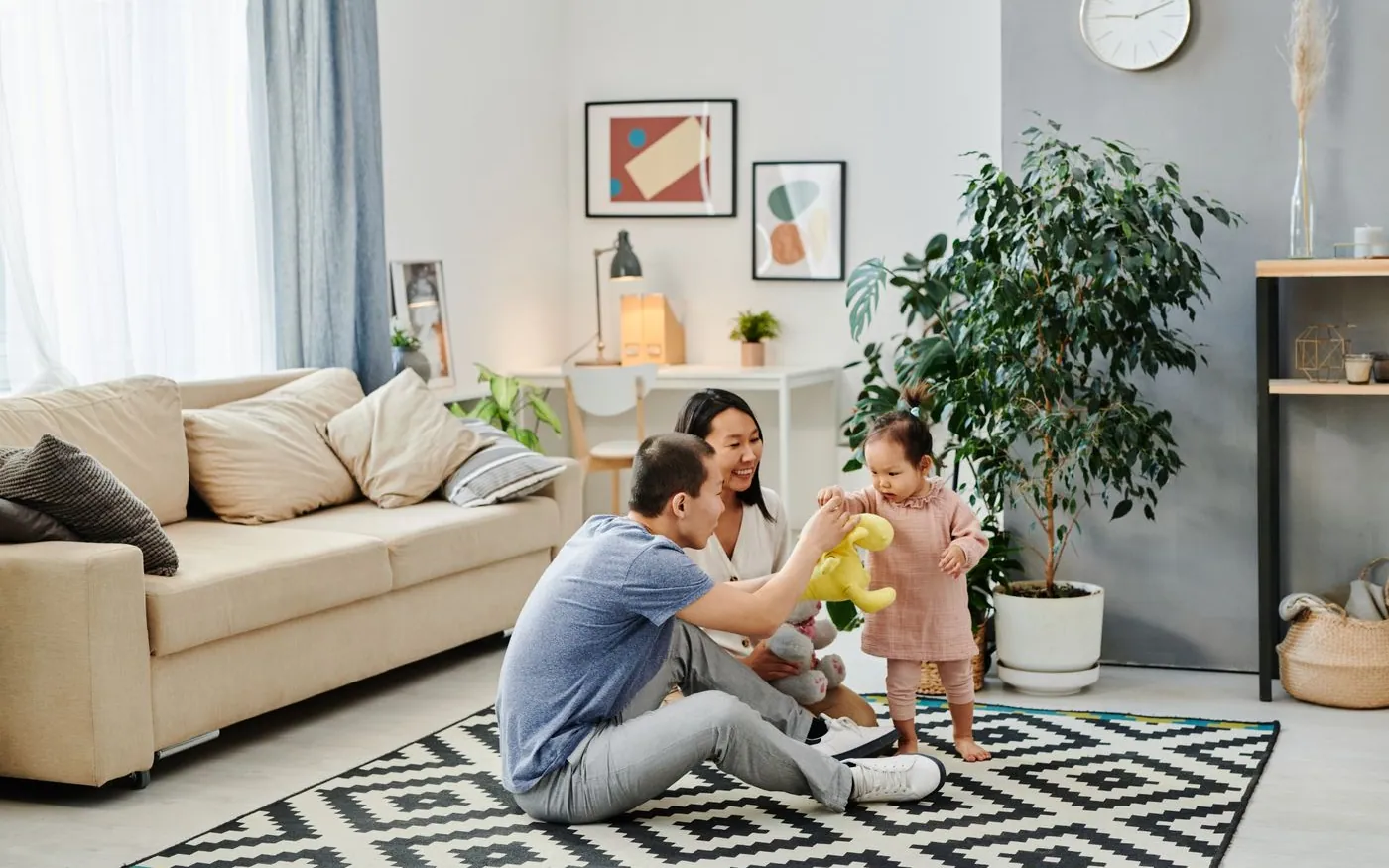
In a NIMO editorial scene, a box of clean cloths has been placed on the floor. A child takes one out, puts it back and hands another to Grandad. No educational device announces success, yet there is movement, intention and an invitation to join. Play from one to three can grow this way: familiar materials, changing possibilities. The age bands below suggest starting points, not developmental tests. Choose by what your child can safely manage and what captures their attention today.
The short version
- 01
Simple materials become rich play when adults follow the child's idea.
- 02
Add one small challenge, not more test questions.
- 03
Homemade materials still need checks for choking hazards, cords and breakable parts.
Jump to the part you need
Make a space where yes is possible
Before choosing a game, choose a dry, non-slip floor area away from cooking and balcony access. Set out a few intact, age-appropriate objects and separate older siblings' small-piece toys. UNICEF and NHS both describe inexpensive play opportunities. But reused does not automatically mean safe: remove staples, loose tape and detachable material that could end up in a mouth. A simple setup should reduce supervision difficulties, not add hidden ones.
Fewer materials mean fewer interruptions to say do not touch, and more room to return to the same idea. An open box, several large uncracked plastic cups and a board book are one possible arrangement. They need not all appear at once. If mouthing is frequent, put small craft materials away and choose another activity rather than making the game depend on the child obeying a no-mouthing rule.
Around 12–18 months: in, out and found again
Put one large object in a box and wait. The child may retrieve it, tip the box or give it back to you. Respond to that action rather than correcting it into a prescribed sequence. If interest continues, place the object beside the box and let the child choose the next move. Brief comments such as inside and out have a visible meaning; no spoken repetition is required.
For a finding game, leave part of an object visible behind a securely positioned book on the floor. If the child does not find it, make the setup easier and look together rather than concluding they do not understand. Children with different movement or hand-use abilities can participate with suitable support. Standing or walking is not an admission requirement; having a way to take a turn is what matters.
Around 18–24 months: carrying, matching and pretending
Delivering cloths between two baskets can become a carrying game. Keep the path clear, the load light and the destination close; it need not become a race. After several turns, the child may swap roles so the adult delivers and the child receives. If moving is tiring, both baskets can stay within seated reach. The shared purpose survives even when the movement changes.
Pretend routines might use an empty cup for a toy animal or a small cloth on a low table beside an adult. Do not use medicine containers, cleaning products or actual hot items as props, even closed. The child may repeat one action for a long time. There is no need to add an elaborate plot to make play look clever; another toy waiting for a turn may be enough.
Ages two to three: a story with room for choices
A box can become a parking place for large toy vehicles or a pretend shop with safe objects. Start with one small problem: a vehicle has arrived, so where could it go? Then let the child steer. The story does not need accurate occupations or a proper beginning and ending. If today's shop sells only nested cups, the story can still belong to the child.
Offer limited choices that keep action possible: here or there, a low bridge or a detour. Too many questions can consume the child's actual playing time. When another child joins, similar materials can reduce conflict; adults can help with brief waits and intervene to keep both children safe if hitting or biting occurs. Sharing need not become a test of which child is better behaved.
An adult turn should leave a child turn
In this editorial example, a child stacks two cups and knocks them over. The adult stacks two, stops and waits instead of immediately producing a taller tower. The child might knock them down, add a cup or leave. Each response helps choose what happens next. This differs from moving the child's hands through a project whose outcome the adult has already decided.
Waiting does not require total silence or anxious counting. It means leaving room for an initiative. On a tired day, sitting nearby and responding a few times may be more sustainable than an elaborate activity that cannot be repeated. If the child repeatedly turns away, rubs their eyes or becomes distressed, stop, rest or change the setting rather than insisting on finishing because preparation took effort.
What should stay out of the play box
Loose dried beans, coins, small caps, small balls and button batteries do not belong in freely accessible toddler sensory trays. Avoid loose small magnets and insecure battery compartments. Read manufacturer age warnings; a not-for-under-threes label does not disappear because an adult plans to sit nearby. Choose age-appropriate art materials, supervise their use and put them away afterwards. Attractive photographs are not a safety assessment.
Water play requires a nearby, continuously attentive adult and immediate emptying afterwards; bath seats and older siblings are not substitutes. Do not turn long cords, plastic bags or head-covering materials into costumes. It is reasonable to drop an idea entirely when it is difficult to make safe in your home. Fewer games that are easier to supervise are a responsible choice, not an impoverished childhood.
Notice more than the finished object
After play, remember a moment of inviting, trying another way or seeking help. Record it if it helps you understand your child, without counting daily minutes and skills. If development concerns you or an established ability is lost, discuss specific examples with a health professional. Home play is neither a diagnostic procedure nor a replacement for prescribed developmental support.
Tomorrow may use the same box. Move it slightly, introduce a role or change nothing if repetition is welcome. Value does not depend on how many novel activities the adult invents. It lies in a safe opportunity for the child to act with someone available to respond. Packing away need not bring a polished conclusion, only the possibility of wanting to return.
Practical checklist
- Choose a few intact, age-appropriate objects without small parts.
- Leave room for the child to initiate, then follow that idea.
From the guide to your next step
How NIMO built this guide
NIMO writes and localizes each guide for Vietnamese families, then checks key facts against the official references below. The links support the guide; they are not the guide itself.
Sources checked by NIMOFor symptoms or treatment decisions, confirm with an appropriate health professional.Next review · Dec 5, 2026