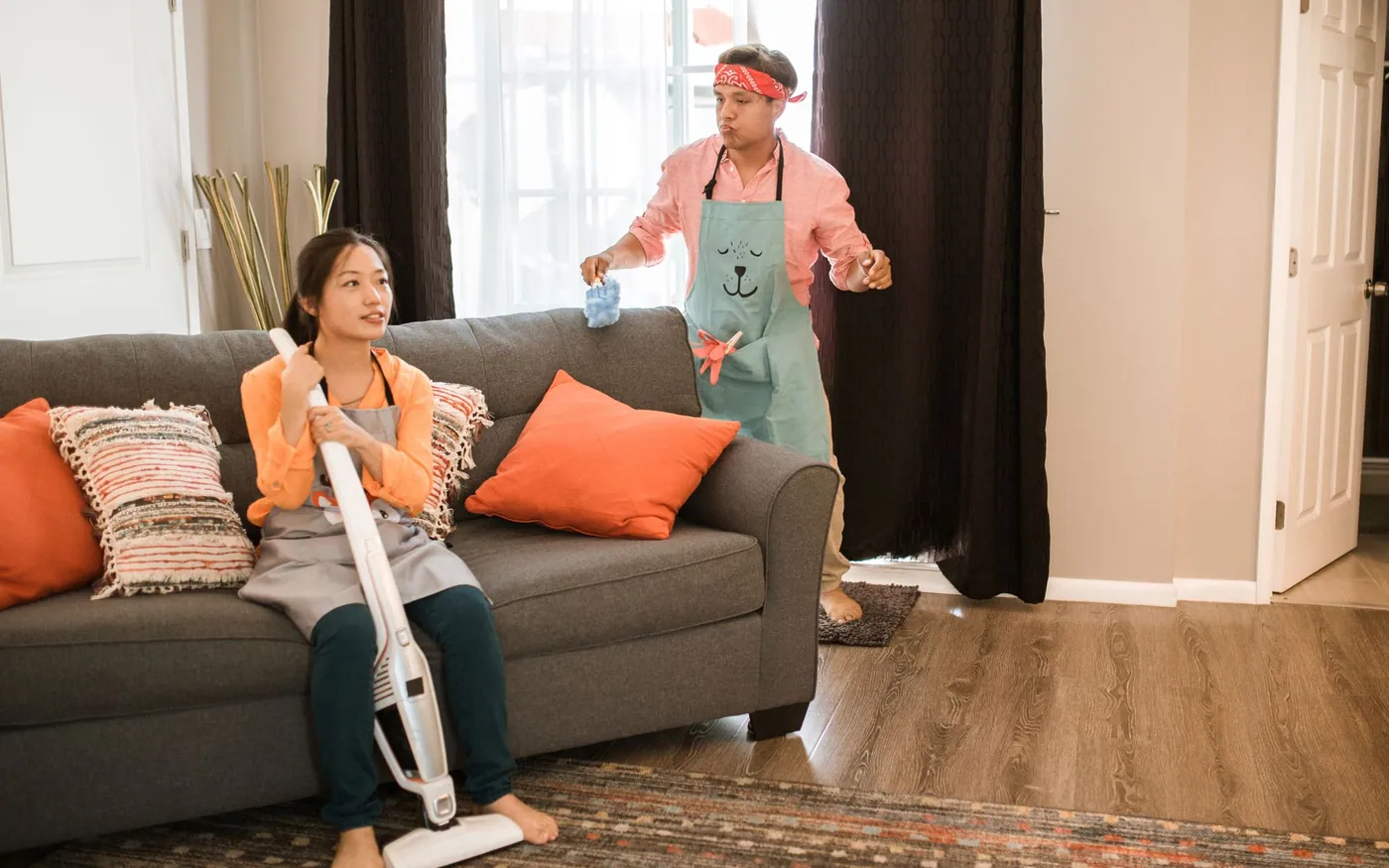
Sometimes you sit down while your mind stays at the sink: bottles, a school message, tomorrow's dinner. Guilt can turn even quiet time into another assignment to complete correctly. This is not a new wellness routine to master. It is a way to notice a need, make room for it, and ask someone else to carry the work that would otherwise follow you into your break. Your worth is not limited to how well you care for other people.
The short version
- 01
Rest does not have to wait for a finished house or workload.
- 02
A useful break needs protected boundaries and a real handover, not permission alone.
- 03
Self-care supports health; it does not replace treatment for persistent distress.
Jump to the part you need
1. Separate a need from the accusation attached to it
Try putting two sentences side by side: “I need to eat without getting up repeatedly” and “I am selfish if someone watches the baby while I eat.” One describes a need; the other judges it. You do not have to win an internal argument before meeting the need. Name what is missing: food, quiet, adult conversation, rest, or a medical appointment. A specific name gives both you and someone helping you something concrete to work with.
Guilt may sit beside something you genuinely value, such as responding to your child or not overloading a relative. Caring about your family does not mean every personal need must come last. Two things can be true: your child needs safe care, and the caregiver needs care too. WHO places self-care alongside supportive conditions and healthcare, rather than presenting it as a demand to manage everything alone. [Source: WHO](https://www.who.int/news-room/fact-sheets/detail/self-care-health-interventions).
2. Choose what helps, not what looks like self-care
A bath, a run, or coffee outside may be restorative for one person and another chore for someone else. Ask, “What do I want less of after this?” If the answer is noise, a busy social plan may not help. If it is loneliness, turning off your phone may be the wrong fit. If you are in pain or dizzy, do not reclassify a need for medical assessment as a relaxation goal. Choose for today's need rather than an attractive image of rest.
You may start with a short interval because that is what your day allows, but it is not the limit of what you are allowed to need. Ten minutes sitting down cannot repay an entire broken night. A walk cannot fix an impossible work schedule. A small break is an opening, not a reason for family or work to refuse larger support. If taking it requires skipping food or staying up later, the plan is borrowing from another essential need.
3. Name the break and the work that travels with it
Instead of “Could you help a little?”, try: “After dinner I need to lie down. Please take care of the child from clearing the table through changing into sleepwear, including finding supplies and clearing up. Unless something needs immediate attention, let's talk afterwards.” Adapt the wording to a partner, relative, friend, or housemate. Keep three elements: when the break happens, what the other person owns, and when you reconnect. The resting person should not remain the household dispatcher from the next room.
Before stepping away, make the care arrangement genuinely safe: the person taking over needs essential information, the ability to care for the child, and a clear reason to call you or a clinician. After that, small differences in folding or tidying are not necessarily failures. If every break needs fresh instructions, arrange a fuller handover of the whole responsibility. UNICEF's caregiver work supports attention to caregivers' support needs; this particular handover is NIMO's practical suggestion. [Source: UNICEF](https://www.unicef.org/documents/caring-caregiver).
4. You do not owe a productivity report afterwards
You might look out of a window, listen to a song, or message a friend. You need not return with proof of successful meditation, enough steps, or an improved mood. If someone asks why you are still tired, try: “That time helped, but I still need sleep and regular sharing of the work.” Rest is not a contract promising that you can tolerate everything afterwards. A realistic expectation keeps a welcome pause from becoming pressure to recover immediately.
Some breaks feel uncomfortable because your thoughts are still racing. Treat that as information: do you need a transition, a conversation about a worry, or someone to finish an unresolved task? Do not immediately conclude that you are bad at relaxing. One note may be enough: “Next time, the school message needs another owner before I switch off.” Adjust the conditions around the break rather than grading the character of the person who is exhausted.
5. When there is nobody to take over
If you parent alone, relatives live far away, or money is tight, “just ask for help” skips the hardest part. Separate duties needing an adult's immediate responsibility from things that can be simplified or postponed. A simpler meal, fewer clothes needing special care, or declining a social obligation can create room without lowering the standard of care. Do not leave a young child in an unsafe situation to meet a rest target. Support must fit the child's actual age and needs.
Look for a smaller, clearer request: bringing a meal on an existing journey, accompanying you to an appointment, or calling at the time you feel most alone. You do not owe a full personal history in exchange for help. If nobody suitable is available, tell a healthcare professional about sleep loss, caregiving pressure, and the support you lack, and ask about local options. Services vary; a website or online group is not the same as someone reliably taking responsibility.
6. Some needs call for care, not greater effort
Arrange professional assessment if low mood, anxiety, lost enjoyment, self-blame, or difficulty functioning persist; you need not wait for everything to collapse. After birth, being unable to sleep even when you have an opportunity is worth reporting. Frightening, unwanted thoughts that distress you are not automatically a wish to harm someone; seek support if they recur or make you avoid ordinary life. [Sources: NHS postnatal depression](https://www.nhs.uk/mental-health/conditions/postnatal-depression/), [NHS Wales perinatal OCD](https://performanceandimprovement.nhs.wales/functions/strategic-programme-for-mental-health/perinatal-mental-health/support-and-advice-leaflets/pnmh-support-leaflets/leaflet-6-perinatal-ocd/).
If there is intent to cause harm, you cannot keep yourself or a child safe, or postpartum symptoms include delusions, hallucinations, or marked confusion, seek emergency help now. Ask a trusted adult to stay and keep the child safe; use emergency care or local emergency services rather than waiting for another break. Postpartum psychosis is a medical emergency. Seeking treatment does not invalidate your self-care efforts. It means matching the help to the need. [Source: NHS](https://www.nhs.uk/mental-health/conditions/post-partum-psychosis/?force_isolation=true).
Practical checklist
- Name one need today without attaching a criticism.
- If someone takes over, include preparation and clearing up.
- If distress persists, write one sentence to open a care appointment.
How NIMO built this guide
NIMO writes and localizes each guide for Vietnamese families, then checks key facts against the official references below. The links support the guide; they are not the guide itself.
General health information · Checked against official sourcesFor symptoms or treatment decisions, confirm with an appropriate health professional.Next review · Dec 5, 2026