After a gestational diabetes diagnosis, an ordinary meal can start to feel like an exam. Is rice allowed? Are rice vermicelli lighter than pho noodles? Must mango disappear? A better starting point is the actual meal, not a verdict on its name. Two bowls of pho can contain very different amounts of noodles and come with very different drinks. The aim is a nourishing pregnancy and an individual glucose plan, not finding food that always produces a reassuring number.
The short version
- 01
Keep carbohydrate in the nutrition plan; adjust portions with your care team.
- 02
A meal-and-timing record is more useful than a banned-food list.
- 03
Needing medication does not mean you ate badly or failed your baby.
Jump to the part you need
Start with the bowl you actually use
Carbohydrate is not confined to table sugar. Rice, pho noodles, vermicelli, sticky rice, bread, milk and fruit all contribute to a meal's total. Replacing rice with a much larger portion of noodles may therefore miss the point. NHS hospital dietary guidance emphasizes retaining carbohydrate for energy and nutrients, rather than removing an entire food group from pregnancy nutrition.
Try choosing one household bowl as a shared reference. Photograph your usual rice serving in it, or describe how much of a noodle portion you actually finish. Bring that picture to a nutrition appointment. This is not carbohydrate calculation by eye. It prevents a practical misunderstanding: the clinician imagines one bowl while the household serves a bowl twice that size.
Ordering pho without ordering a different life
One ordering approach to discuss with your dietitian is noodles served separately, or a smaller noodle portion, alongside suitable protein and safely prepared vegetables. You might say, ‘Less noodle, please, with the remainder separate; no fried dough or sweet drink.’ This is an ordering example, not a prescribed serving. Vegetables and meat do not make noodles unlimited or cancel a milk tea afterward.
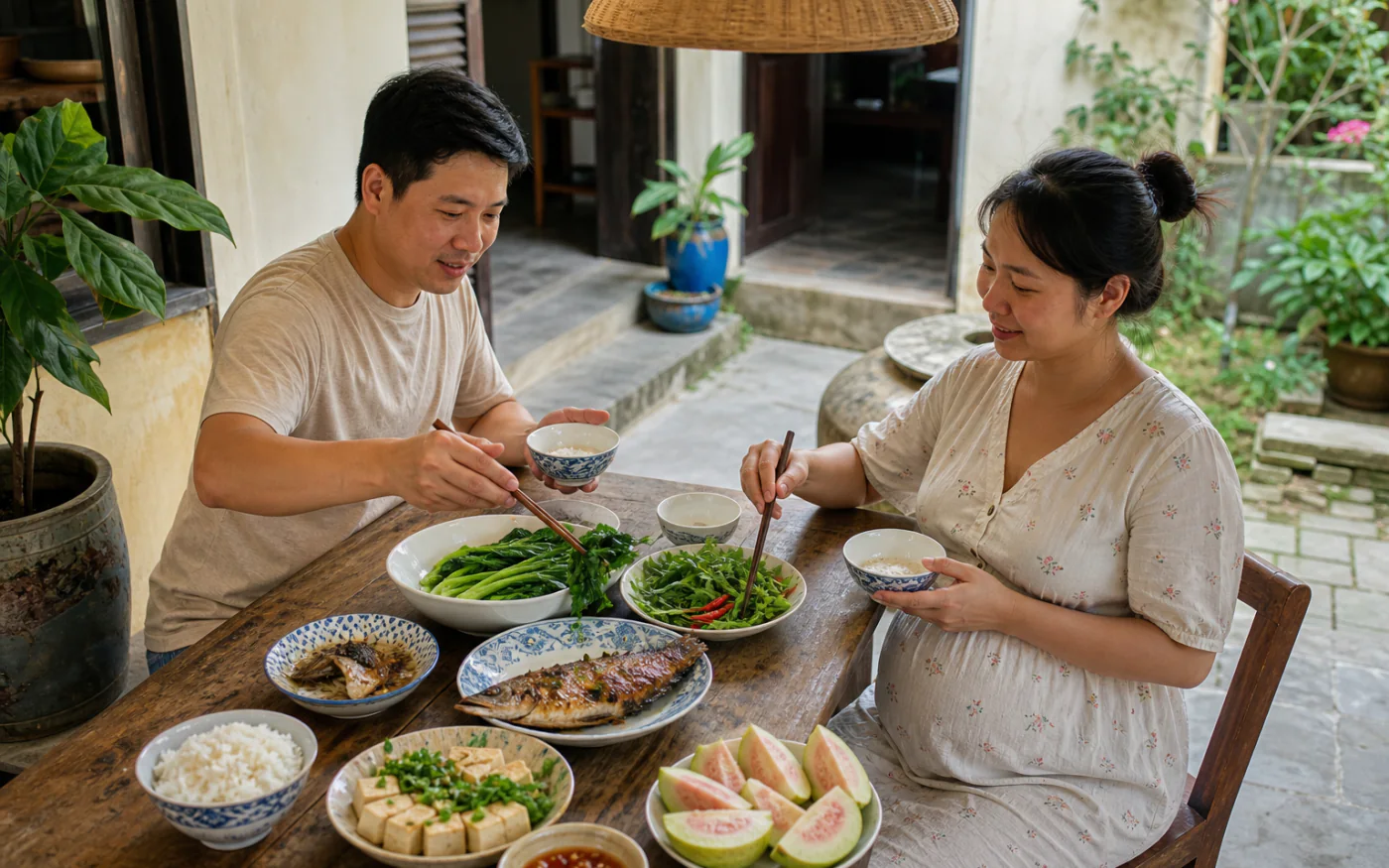
If the bowl arrives already assembled, the day is not ruined. Follow the most workable version of your plan, note what you ate and take any questions back to the team. At home, the family can share fish, eggs or tofu and vegetables while serving rice individually. That avoids cooking two separate dinners and prevents a diagnosis from becoming exclusion from the family table.
Fruit is not a sweetness contest
Whole fruit can remain part of the eating plan, but its portion counts rather than becoming an unlimited extra. A sour taste does not prove that fruit has no glucose effect. Instead of adding a whole fruit platter after a rice-heavy meal, discuss whether some belongs at another point in the day. Another person's mango allowance is not your personal prescription.
Drinks can make a meal harder to interpret: juice, sugarcane juice, condensed-milk coffee and prepared milk drinks are easy to consume without remembering them as food. On a label, compare total carbohydrate and the stated serving with what you actually drink. ‘No added sugar’ does not mean carbohydrate-free, and a bottle may contain more than one of the servings shown.
Arrange the day around real life
Skipping lunch to save up for dinner, or cutting all starch because readings are frightening, is not a safe self-treatment strategy. The plan needs to account for work, nausea, hunger and medication. If breakfast is difficult, tell the team so food distribution can be adjusted. A beautiful timetable is not useful if every afternoon ends with hunger that makes concentration difficult.
For a small planning exercise, draw morning, midday and evening boxes, then add your usual snacks and drinks. Circle periods of hunger and readings outside the goals your clinician set. Take that map to the appointment rather than inventing compulsory snack times. If activity is appropriate for your pregnancy, discuss a manageable routine; exercise is not punishment for having eaten something.
Use readings to ask a better question
Use the testing times and individual targets you were given, including how the post-meal interval is counted. ‘Started eating at seven, smaller noodle portion, no sweet drink, tested at eight as instructed’ says more than ‘pho raises my sugar.’ Send repeated out-of-target readings through the agreed contact pathway rather than tightening food restrictions for days in an attempt to solve everything alone.
Include what makes the plan hard: nowhere private to test at work, running short of strips, persistent hunger or uncertainty about the meter's units. Those are support needs, not discipline failures. Ask, ‘Which one thing should we change first, and when should I report back?’ A specific answer avoids changing food, testing time and medication routines all at once.
When food is not the whole answer
Pregnancy changes insulin requirements, so medication may still be needed despite sensible food adjustments. NHS guidance notes that treatment can change as pregnancy progresses. Do not delay it to prove that willpower is enough, or substitute herbal products for prescribed care. If your medication can cause low glucose, obtain a specific recognition and response plan rather than improvising from a social-media discussion.
Before birth, ask for a written plan covering food, glucose checks and medication around admission, plus the prescribed follow-up testing after pregnancy. The diagnosis should not simply end with the meter going into a drawer. What is worth keeping is the ability to state your needs clearly: enough food, monitoring you understand and help when the plan needs to change.
Practical checklist
- Bring a usual meal photo and the label of a drink you regularly buy.
- Get written testing times, personal targets and contact instructions.
- Arrange post-pregnancy glucose follow-up before maternity care ends.
How NIMO built this guide
NIMO writes and localizes each guide for Vietnamese families, then checks key facts against the official references below. The links support the guide; they are not the guide itself.
General health information · Checked against official sourcesFor symptoms or treatment decisions, confirm with an appropriate health professional.Next review · Dec 5, 2026