The shelf may offer scented sprays, animal-shaped patches and bottles marked for the whole family. What matters is not the front illustration but the active ingredient, directions and person using it. During pregnancy or early childhood, the goal is not to avoid every product at any cost. It is to reduce bites with credible protection while avoiding incorrect application and vague promises.
The short version
- 01
Choose by active ingredient and the actual label, not a natural claim or baby picture.
- 02
Clothing, netting and household mosquito control complement skin repellent.
- 03
Children need age-appropriate products applied by an adult, avoiding hands, eyes and mouth.
Jump to the part you need
Protection is not only an evening task
WHO notes the daytime activity of dengue-transmitting mosquitoes, while CDC reminds readers that mosquitoes bite by day and night. A stroller nap, time on a veranda and a park visit therefore belong in the plan. Not every bite signals disease, but protection that starts only at bedtime can miss a substantial part of everyday exposure.
Look at an ordinary day rather than only a special outing: who takes the child outside, where netting fits, and whether a pregnant person spends long periods outdoors. A family might move away from a mosquito-heavy corner or choose a screened resting place rather than trying to compensate entirely with more applications. The environment is part of protection too.
Read the ingredient before choosing the scent
CDC lists ingredients such as DEET, picaridin and IR3535 in EPA-registered products and supports directed use of registered repellents during pregnancy and breastfeeding. Picaridin is also called icaridin. This informs a conversation about ingredients, not an endorsement of every similarly labelled bottle sold in Vietnam. The actual product, local labeling and legitimate source still matter.
A usable label explains who may use the product, where to apply it, when to reapply and what to avoid. If a seller promises absolute safety without showing directions, seek a clearer option. An unlabelled travel bottle removes information when it is needed most. A small original container is more practical than a decanted liquid that nobody can identify.
Suppose two bottles name the same ingredient, but only one has complete directions you can understand. They are not automatically demonstrated equivalents. Ask for the full label and a reliable source before use. For a brief outing, the question need not be which is strongest, but which can be used correctly for this person and activity with instructions the caregivers can actually follow.
Pregnancy guidance is not an infant age label
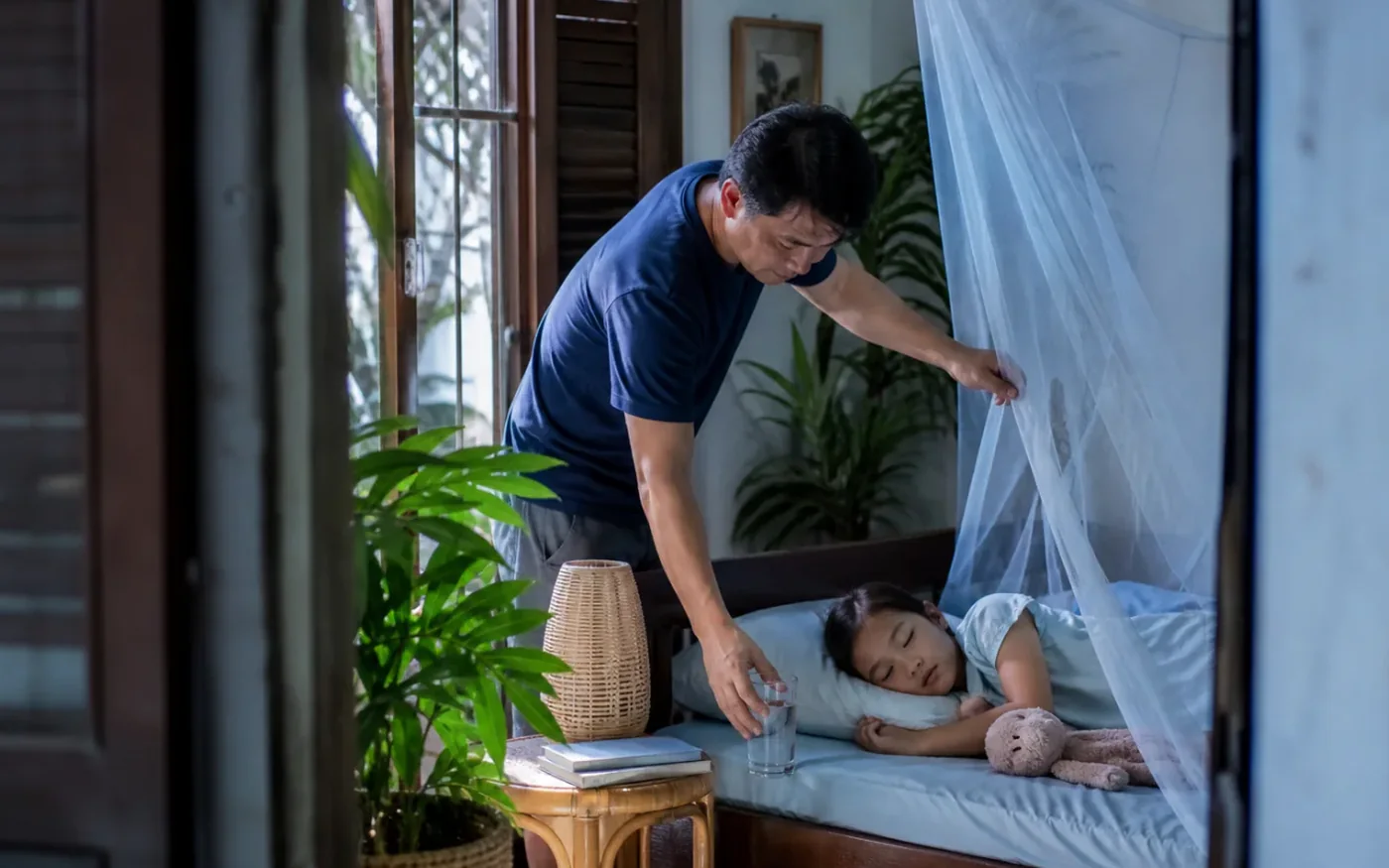
A product suitable during pregnancy is not automatically suitable for a newborn. For a very young baby, start with appropriate clothing and securely fitted stroller netting, then seek professional advice if a skin product is needed. Do not substitute a heat-trapping solid cover for mosquito netting. Keep the child visible, ventilated and away from loose material they could pull toward themselves.
CDC advises avoiding OLE or PMD products under age three, while EPA describes exceptions for certain specific OLE labels. Do not extrapolate those exceptions to the bottle in your hand. A simpler approach for an under-three is another age-appropriate option discussed with a pharmacist or clinician, following the local label. Fragrant essential oil is not equivalent to an evaluated OLE repellent.
Make application a deliberate routine
EPA advises application to exposed skin or clothing as labelled, avoiding eyes, mouth, wounds and irritated skin. Adults should apply a child's product and keep it off the child's hands. For the face, apply first to the adult's hands rather than spraying directly. Work away from food in a ventilated place; misting the entire snack table is not added protection.
When sunscreen is needed, CDC advises sunscreen first and repellent second. Follow each product's reapplication directions rather than automatically repeating repellent whenever sunscreen is renewed. Sweat or water may affect protection, but do not justify unlimited applications. At a caregiver handover, explain what was used and when so that each adult does not independently add another layer.
Let netting, clothing and the home share the work
Loose, weather-appropriate long clothing reduces exposed skin, while screens and netting support resting areas. CDC specifically warns that permethrin products for clothing or equipment are not for direct skin application. Household insecticide is not personal repellent. Two bottles showing the same mosquito illustration can have entirely different purposes and instructions, so keep them distinct.
A household walk-through should notice standing water and water-holding containers, not just the spot where a mosquito was seen. Share small tasks such as addressing a collection tray or covering appropriate containers instead of assigning one person to spray everywhere. Patches, bracelets or pleasant scents should not displace clearly directed protection. Convenience is useful only when its limits are understood.
A day involving swimming, outdoor play and a nap contains several different situations. At transitions, consider which clothing or netting still protects and what the product says about water exposure. Do not mix products into one convenient bottle or borrow an adult's routine for a child. For another caregiver, provide the identified product and a readable instruction note rather than the vague reminder to remember mosquito protection.
After the outing, and if symptoms appear
When protection is no longer needed, wash treated skin as directed and store the product beyond children's reach, away from drinks or toiletries they use independently. If irritation develops, stop that product and seek advice, keeping the ingredient label. Breathing difficulty, facial swelling or severe illness requires urgent help, not an experiment with another product to see whether it feels better.
Repellent reduces bites; it cannot guarantee freedom from dengue. Seek clinical advice about fever after exposure, especially in pregnancy or a young child. Severe abdominal pain, persistent vomiting, bleeding or breathing difficulty needs immediate assessment; WHO notes that severe signs can appear as fever subsides. Bring home a workable routine, not the belief that one bottle has removed every risk.
Practical checklist
- The active ingredient, age directions and reapplication instructions are readable.
- Caregivers know which product was applied and when.
- Appropriate netting or clothing and safe product storage are ready.
From the guide to your next step
How NIMO built this guide
NIMO writes and localizes each guide for Vietnamese families, then checks key facts against the official references below. The links support the guide; they are not the guide itself.
General health information · Checked against official sourcesFor symptoms or treatment decisions, confirm with an appropriate health professional.Next review · Dec 5, 2026