A tidy home can still hold water in a plant saucer, vase or toy left outside. For dengue prevention, those small places matter more than the impression that the house has few mosquitoes. A Can Tho CDC report dated 26 August 2026 describes larval control and spraying in Cái Răng. It is a reminder to maintain household routines, not a reason to panic or assume a spraying team replaces them.
The short version
- 01
Inspect, empty and scrub water-holding items weekly; cover necessary storage.
- 02
Dengue-carrying mosquitoes are active by day, so protection cannot be night-only.
- 03
A falling fever does not by itself establish recovery.
Jump to the part you need
Walk through the home looking for water
WHO describes dengue mosquitoes breeding in water containers around homes, not only in distant riverside areas. Look indoors and out at plant saucers, buckets, vases, trays and objects left after rain. CDC recommends a weekly routine of emptying, scrubbing, turning over, covering or discarding water-holding items. Replacing water without cleaning the container can leave attached eggs behind.
Choose a memorable time and divide areas rather than asking one person to remember everything. The plant carer checks saucers; the outdoor cleaner checks discarded items; the child's caregiver checks toys. Children can help identify safe, accessible containers with an adult, but should not handle chemicals or climb to inspect roofs. A repeatable small routine is more useful than one dramatic cleanup followed by weeks of neglect.
Keep needed water without keeping mosquito access
Not every household can eliminate water storage. Cover what is needed properly and clean it according to local health guidance. Do not improvise chemicals in drinking water or use insecticides outside their label. For a shared breeding site beyond household control, give building management or local health staff an exact location rather than a general complaint that there are many mosquitoes nearby.
The Cái Răng report describes container checks alongside spraying. Cooperate with specific local instructions and ask how to protect children and when treated areas can be re-entered; do not copy professional spraying procedures at home. Spraying does not remove water-holding objects. Household checks continue afterwards, even through several days when no mosquitoes are noticed.
Bring protection into the daytime
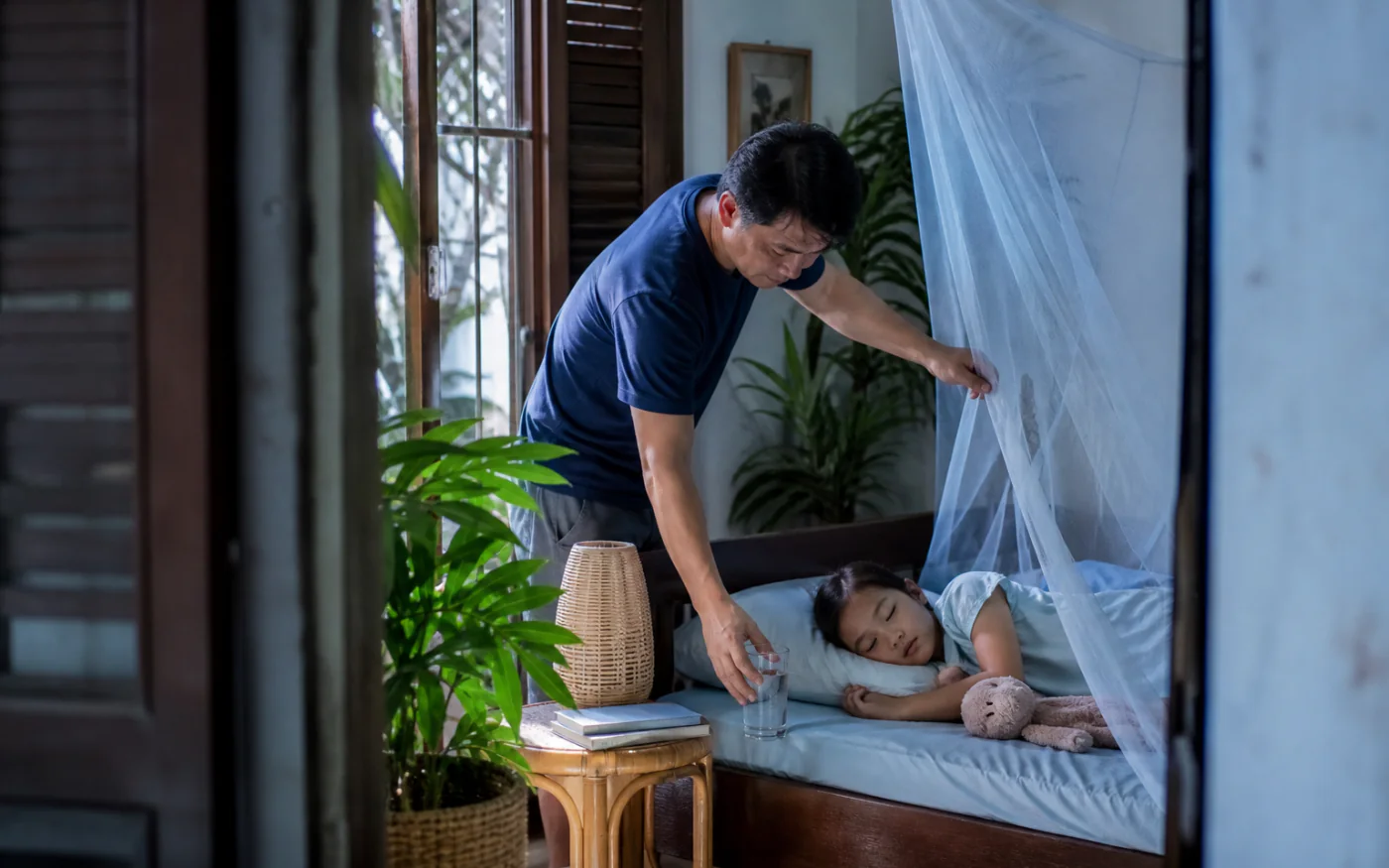
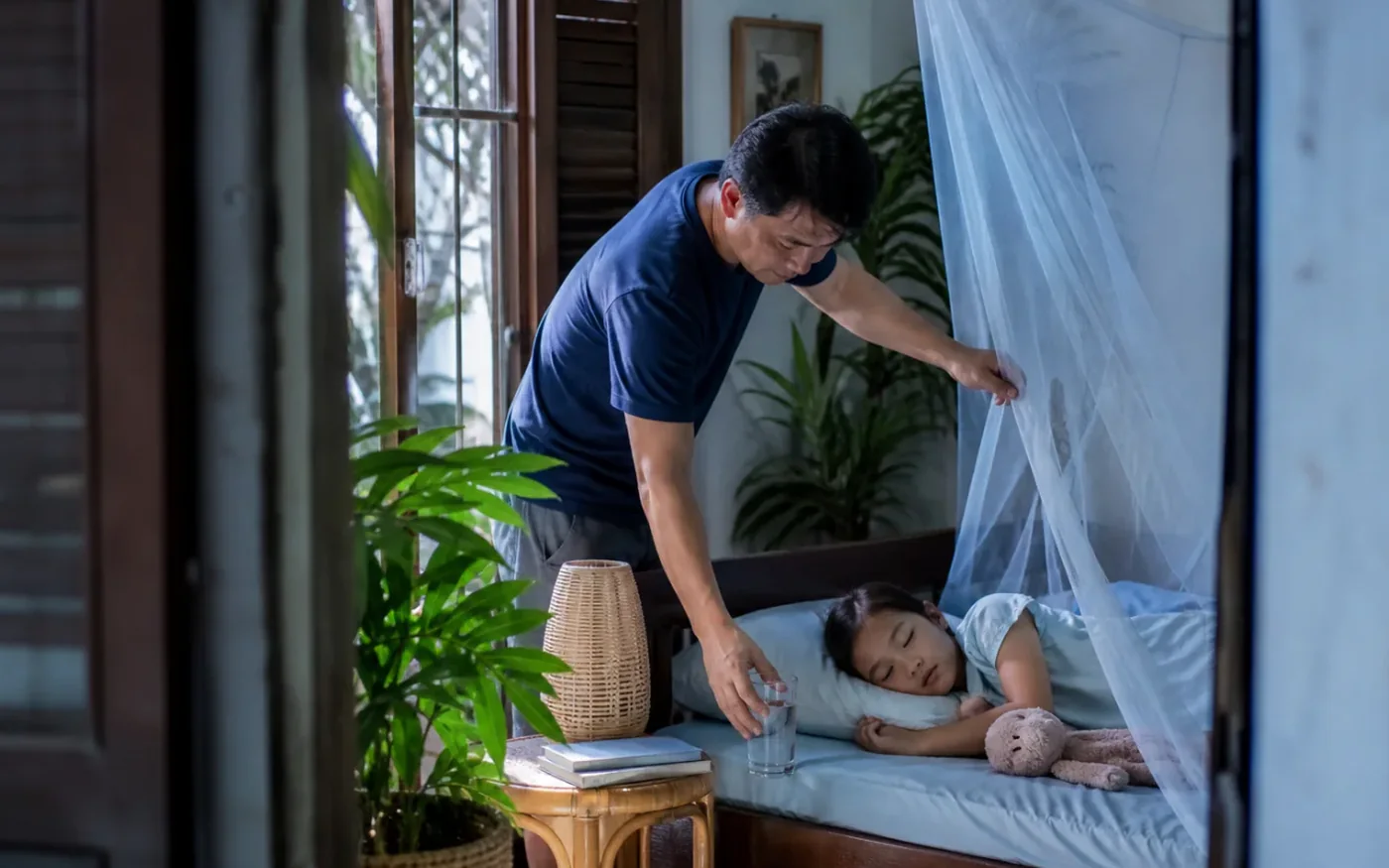
WHO notes that dengue vectors are active during the day. Night-only net use leaves naps, indoor play and family visits outside the plan. Maintain window screens, use covering clothing suited to the heat and protect daytime sleep with safely used netting. Stroller mosquito mesh should be fitted as instructed, not replaced by a blanket that seals the child into a hotter space.
When another setting cares for the child, agree who supplies and applies repellent and follows its reapplication instructions. Avoid several adults independently adding different products without recording them. Explain any skin irritation or previous reaction. A usable plan travels with the child without alarming caregivers: make it short and specific, and keep products out of children's reach.
Choose repellent by its label, not the word natural
CDC recommends evidence-based repellents used according to directions. Read the active ingredient, permitted ages, application sites and reapplication instructions; ask a pharmacist or clinician if the label is unclear. Do not assume essential oils or bracelets provide equivalent protection to evaluated repellents. Suitability for an adult does not establish suitability for a baby, and family-friendly marketing is not a substitute for the actual label.
An adult should apply it, avoiding children's hands, eyes, mouth and damaged or irritated skin. For the face, apply to adult hands first and follow directions rather than spraying directly at the child. Do not apply beneath clothing to intensify protection. Sunscreen and repellent have separate instructions; needing more of one does not mean adding both. Stop the product and seek advice if irritation develops.
Fever changes prevention into a care plan
Not every fever is dengue, and a bite photograph cannot diagnose it. Record when fever began, drinking or feeding, urination and new symptoms, then seek medical advice, particularly for young children or those with existing conditions. Explain location and the actual course rather than requesting a test solely because a nearby outbreak was reported. Testing decisions depend on timing and clinical assessment.
If home observation is advised, ask for a review date, reasons to return sooner and an after-hours route to care. WHO warns that aspirin and ibuprofen can increase bleeding risk in dengue; do not self-administer them when dengue is suspected. Other medicine choices require age- and weight-appropriate professional advice, not another child's dose. Protect the person with fever from mosquito bites as part of the plan.
A lower thermometer reading does not end observation
WHO notes that severe dengue signs can appear as fever subsides. Severe abdominal pain, persistent vomiting, bleeding, rapid or difficult breathing and unusual lethargy or restlessness require urgent assessment; collapse, impaired consciousness, seizures or severe breathing difficulty require 115. Do not wait for obvious bleeding before seeking help. A cooler but weaker child deserves attention, not reassurance based only on the thermometer.
After recovery or the end of an outbreak news cycle, keep the sustainable parts: water checks, repaired screens and care contacts. Do not turn one illness into blame for a missed application or one spraying session into a guarantee against infection. Dengue prevention has household and community layers. What a family can control is reducing breeding opportunities consistently and responding promptly when a child's condition changes.
Practical checklist
- Set a weekly water-container check.
- Share the bite-prevention plan with caregivers.
- Read age instructions before using a product.
- Save the care route and urgent warning signs for fever.
How NIMO built this guide
NIMO writes and localizes each guide for Vietnamese families, then checks key facts against the official references below. The links support the guide; they are not the guide itself.
General health information · Checked against official sourcesFor symptoms or treatment decisions, confirm with an appropriate health professional.Next review · Dec 5, 2026