A child with suspected or diagnosed dengue needs immediate medical assessment for significant abdominal pain, repeated vomiting, nose or mouth bleeding, blood in vomit or stool, unusual lethargy or marked restlessness. For breathing difficulty, collapse, difficulty waking or cold pale skin with pronounced weakness, call 115 in Vietnam and seek emergency help. Do not wait for fever to return, a new test result or the next appointment. WHO and Vietnam's Ministry of Health warn that severe signs can appear as temperature falls.
The short version
- 01
Fever resolution does not by itself mean danger has passed.
- 02
Do not independently use aspirin, ibuprofen or IV fluids; obtain a child-specific medication and fluid plan.
- 03
New warning signs need immediate assessment, not the next scheduled blood test.
Jump to the part you need
Why can the quieter thermometer be misleading?
Dengue is a mosquito-borne viral infection. In some patients, fluid leakage from blood vessels and problems involving circulation, bleeding or organs can develop. Temperature does not measure these processes adequately. Falling fever alone does not prove deterioration, but neither does it establish safety. The whole clinical course and the treating team's instructions matter more than a single cooler reading.
CDC particularly emphasises watching as fever resolves, and the course is not identical for every child. Do not use a day number or a fixed elapsed interval to declare the risk over. In an editorial example, a family notices that the child feels cooler but has new abdominal pain and seeks care rather than celebrating the thermometer alone. The task is to recognise change, not diagnose the phase from a calendar.
You do not need a full set of warning signs
Significant or increasing abdominal pain, repeated vomiting or inability to retain fluids, bleeding, lethargy, abnormal agitation and fast or difficult breathing all require urgent assessment. Vietnam's Ministry of Health also highlights cold, clammy skin and cold limbs in a deteriorating child. Do not wait for both vomiting and bleeding, or for visibly large blood loss. Circulation can be seriously affected without obvious external bleeding.
A child with limited speech may not localise pain. Describe concrete behaviour: avoiding movement because of discomfort, unusual distress, reduced interaction or vomiting after attempts to drink. Do not repeatedly press the abdomen to test it yourself. For breathing difficulty or reduced responsiveness, call for help before collecting paperwork. Avoid driving yourself while also trying to observe an unstable child.
Home care must be an agreed plan
Suspected dengue needs clinical assessment; eating a little is not enough to choose home care independently. CDC's clinical guidance considers warning signs, circulation, oral intake, urine, other conditions and social circumstances. Parents do not need to apply a professional classification chart themselves. Ask why home care is appropriate, who will monitor and exactly when to return.
Say if the hospital is far away, night transport is unavailable, only one caregiver is present or follow-up is difficult. These are not side issues; they may change what is safe. Keep written contact details, destination, review schedule and fluid and medicine instructions. An instruction to keep watching is incomplete unless the household understands what to watch and what action follows.
Fluids matter, but an IV is not a home recovery shortcut
For a child cleared for home care, follow the individual drinking plan in manageable amounts and continue food and breastfeeding where applicable as tolerated. If oral rehydration solution is advised, prepare it exactly as instructed, without concentrating it or adding ingredients. Record drinking and urine without forcing large volumes out of fear. Repeated vomiting or markedly reduced urine calls for medical contact.
Do not arrange an informal home IV or assume a drip will speed recovery. CDC cautions that IV fluids are not automatically needed; when indicated, they require adjustment and monitoring to avoid inadequate replacement and overload. These are clinical decisions requiring suitable observation. A child unable to drink or becoming weaker needs reassessment, not merely a switch from a cup to an infusion.
Fever medicine and platelet-boosting promises
WHO and CDC advise avoiding aspirin and ibuprofen in dengue because of bleeding risk. Ask the clinician about suitable fever or pain relief; use paracetamol only as directed for this child and avoid duplicate ingredients in combination products. This article does not prescribe amounts or intervals. If an unknown medicine has already been given, bring its packaging or label photo and tell the team rather than hiding it from fear of blame.
A herbal drink, supplement or food marketed to raise platelets cannot replace assessment, monitoring and treatment. Offer tolerated meals without turning dinner into an attempt to repair a laboratory result. Do not independently add steroids, antibiotics or bleeding-control medicines. For existing long-term treatment, ask how it should be managed; do not stop every prescribed medicine because of a general warning in an article.
A blood result is part of the story
The test and its timing affect interpretation. CDC notes that a negative NS1 or molecular test does not always exclude dengue, and appropriate management of suspected illness should not wait for results. Families need not order a full panel themselves. Ask what the present result establishes, what it leaves uncertain and whether further testing is needed as the illness evolves.
Do not use one platelet count to decide discharge, transfusion or severity yourself. Clinicians combine examination, course and relevant laboratory findings. Keep dated reports together, but return immediately if warning signs appear before the next blood draw. A parent's observations about pain, drinking, urine and alertness complement the laboratory record rather than competing with it.
Prevent bites and return to ordinary life gradually
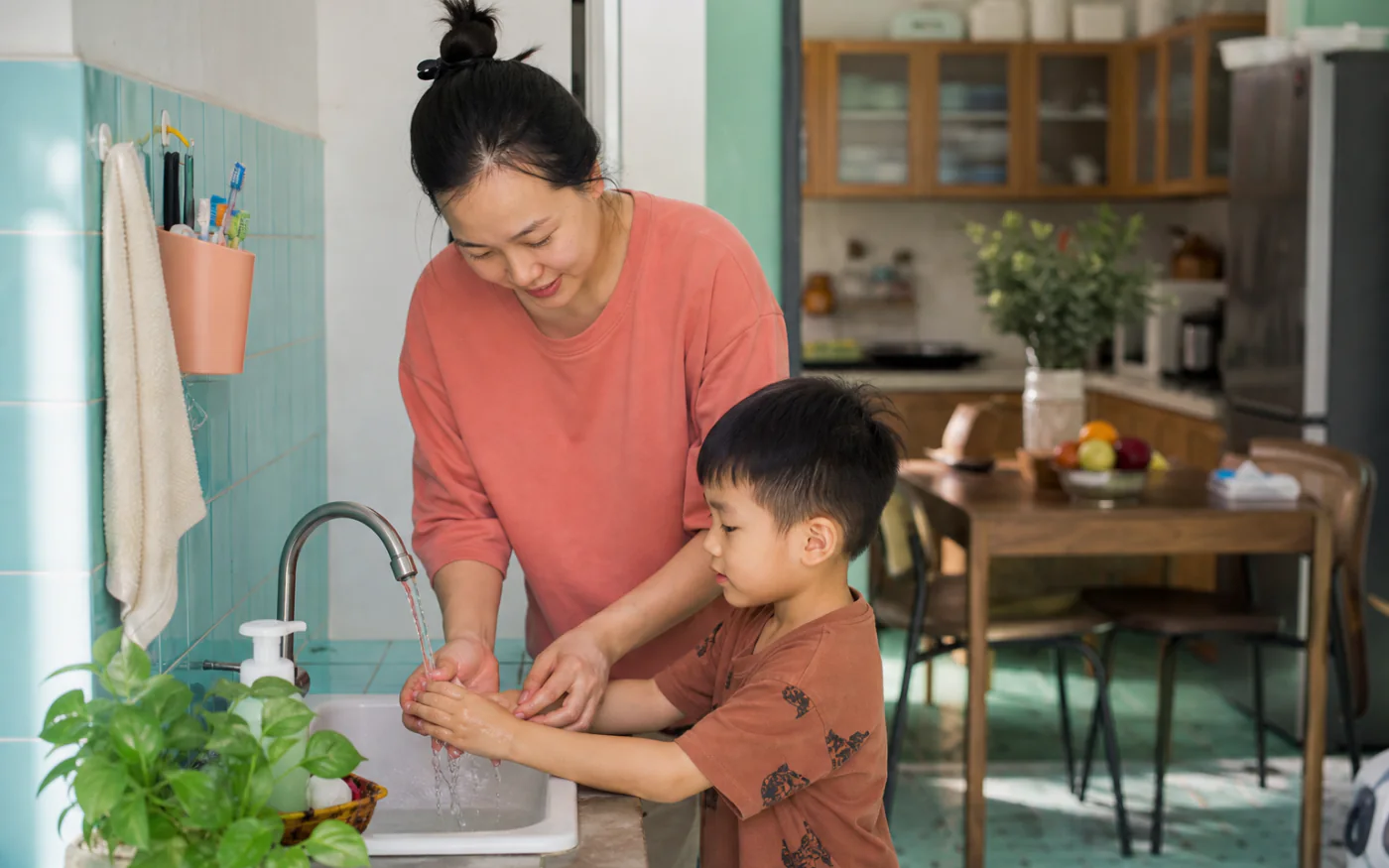
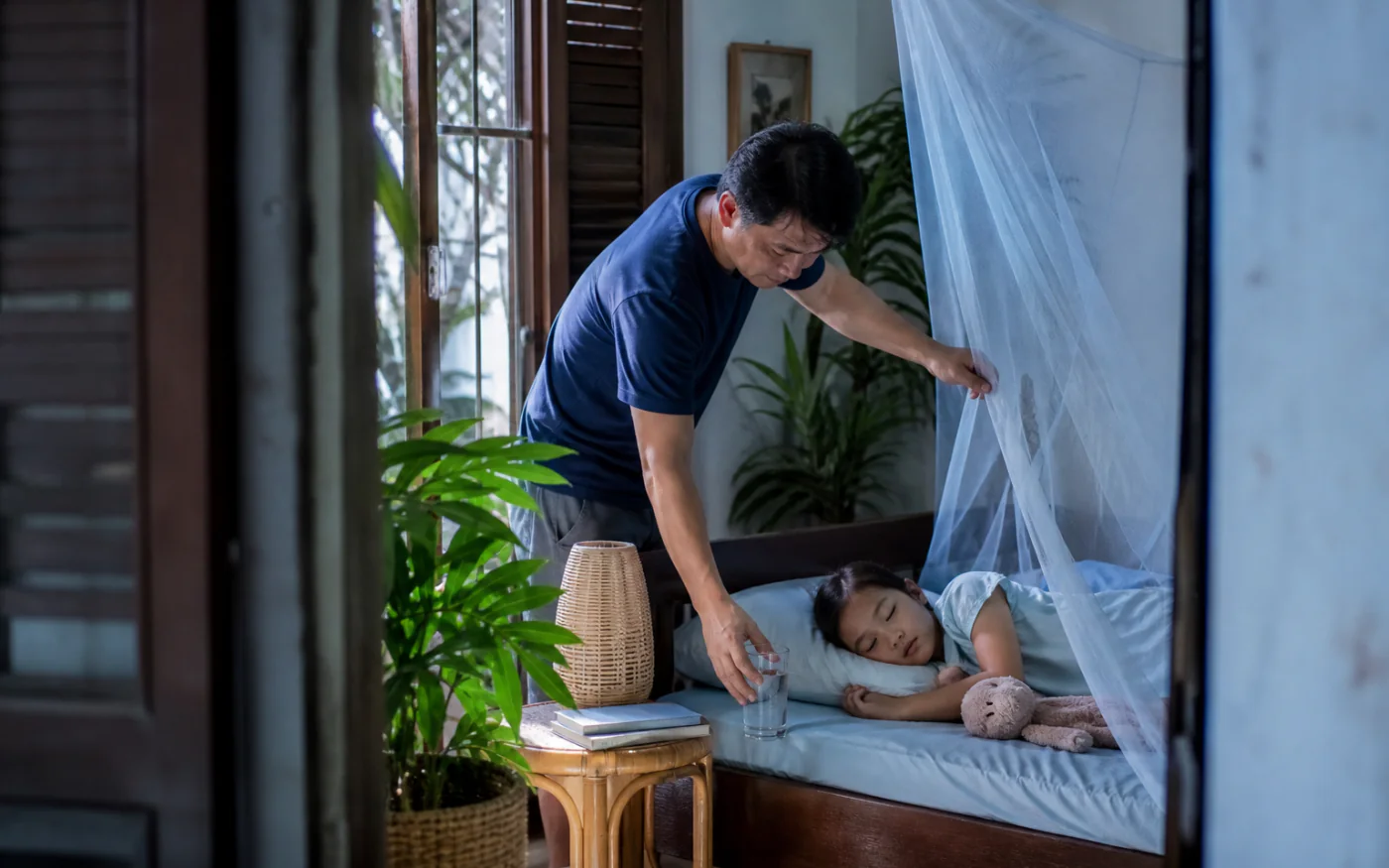
CDC notes that mosquitoes can acquire the virus from an infected person, so bite prevention matters for the sick child and the household. Use safely arranged nets, suitable clothing and labelled mosquito protection, checking product age restrictions. Remove standing water, cover containers and follow local prevention advice. None of these tasks should delay urgent care for a deteriorating child.
Once recovery is assessed, allow rest and a gradual return to eating and play, asking the treating service about childcare and activity. Interest in a toy is not a reason to skip follow-up. A final discussion should clarify remaining reportable changes and when close observation can end. Families do not need a promise that every case will be mild; they need to know when care can continue and when direction must change immediately.
Practical checklist
- Continue observation and follow-up when fever falls.
- Warning signs: seek care now, without waiting for tests or renewed fever.
- Keep a clear plan for medicines, fluids, caregivers and transport.
How NIMO built this guide
NIMO writes and localizes each guide for Vietnamese families, then checks key facts against the official references below. The links support the guide; they are not the guide itself.
General health information · Checked against official sourcesFor symptoms or treatment decisions, confirm with an appropriate health professional.Next review · Dec 5, 2026