If a child has difficulty breathing, turns blue or grey, has a seizure, is unresponsive or is very difficult to wake, call 115 in Vietnam and seek emergency help immediately. A child with suspected or diagnosed hand, foot and mouth disease also needs immediate assessment for unusual repeated startles, limb tremors, marked lethargy, distinctly abnormal agitation or repeated vomiting. Do not wait for a more impressive rash. Home-care discussion below is for children assessed as suitable for it, with a clear follow-up and return plan.
The short version
- 01
Neurologic signs and changes in breathing or alertness matter more than blister counts.
- 02
Mouth pain can lead to dehydration; follow drinking ability and urine output.
- 03
Fading fever or rash does not replace the follow-up or childcare-return plan.
Jump to the part you need
Signs that change the plan immediately
HCDC and Vietnam National Children's Hospital highlight abnormal startles, limb tremor and altered awareness among warning signs of deterioration. Caregivers do not need to assign a clinical grade or wait to count a qualifying number of episodes. A clearly different child, particularly with repeated vomiting, persistent high fever, rapid breathing or markedly reduced drinking, needs assessment now. Do not automatically attribute new unusual startles to poor sleep.
When calling for emergency help, give age, location, the suspected illness and the dangerous change, then follow dispatcher instructions. If contact fails, ask another adult to keep trying while arranging safe access to emergency care rather than waiting for a message reply. Do not give food or drink during a seizure or reduced consciousness. An earlier HFMD diagnosis does not exclude another emergency cause.
The rash is a clue, not a safety score
HFMD commonly affects young children and can involve fever, mouth sores and spots or blisters on hands and feet, sometimes elsewhere. CDC describes most cases as mild, but that does not establish this child's condition at this moment. A photograph in a parents' chat cannot confirm the diagnosis. A small number of visible spots is not evidence that the child is safe to observe without a plan.
At the appointment, describe the course: fever onset, how mouth pain changed drinking, relevant sick contacts and your main concern. You do not need to identify a particular virus before attending. An initial assessment describes the child at that time. New symptoms justify renewed contact; yesterday's instructions are not a guarantee covering every subsequent day.
A sore mouth needs less struggle around food and drink
For mild cases managed at home, HCDC suggests soft, cooled food and smaller meals. Continue breastfeeding where applicable and as advised. The immediate aim is easier drinking and eating, not completion of the usual meal. Try a familiar age-appropriate cup or spoon while the child is alert and safely positioned. Never pour fluid forcefully into a resisting child's mouth.
In an illustrative situation, a child refuses hot porridge but accepts cool sips, so the caregiver notes drinking ability and later offers a small soft portion. This is information, not proof of adequate hydration. Inability to drink, repeated vomiting or dehydration signs require assessment rather than an expanding list of feeding tricks. Ask a clinician or pharmacist about suitable pain relief; do not independently use adult products or oral numbing medicines.
Follow hydration through several observations
NHS describes dehydration clues including less urine, a dry mouth, fewer tears, sunken eyes and unusual drowsiness. Do not wait for the entire set before seeking help. Record urine, vomiting and whether drinking is possible in a form another caregiver can understand. Lethargy, difficulty waking or abnormal breathing require urgent action, not simply another attempt to offer fluids at home.
At handover, say when drinking last went reasonably well and how the child is responding, rather than only saying appetite is poor. Keep instructions, prescriptions and contact details together. If nobody can observe safely, the clinic is distant or transport is difficult, say so during assessment. Home care is not an endurance test that a family must pass regardless of its resources.
Medicines and blisters: avoid improvised treatment
HFMD is viral; do not independently use antibiotics, leftover medicines or multi-product bundles to prevent deterioration. Use only the child-specific plan provided, checking active ingredients and avoiding duplicate administration between caregivers. This article gives no dose. A lower temperature after medicine does not remove danger if alertness, vomiting or breathing is concerning.
Keep skin clean without deliberately opening blisters or layering products in the hope of shortening illness. Be gentle with mouth care and do not scrape sores. Ask the treating service about increasing pain, possible infection or an uncertain product. A shelf full of available products does not mean each has a role in this child's care. The simpler plan is easier to communicate between adults.
Hygiene continues when the child looks better
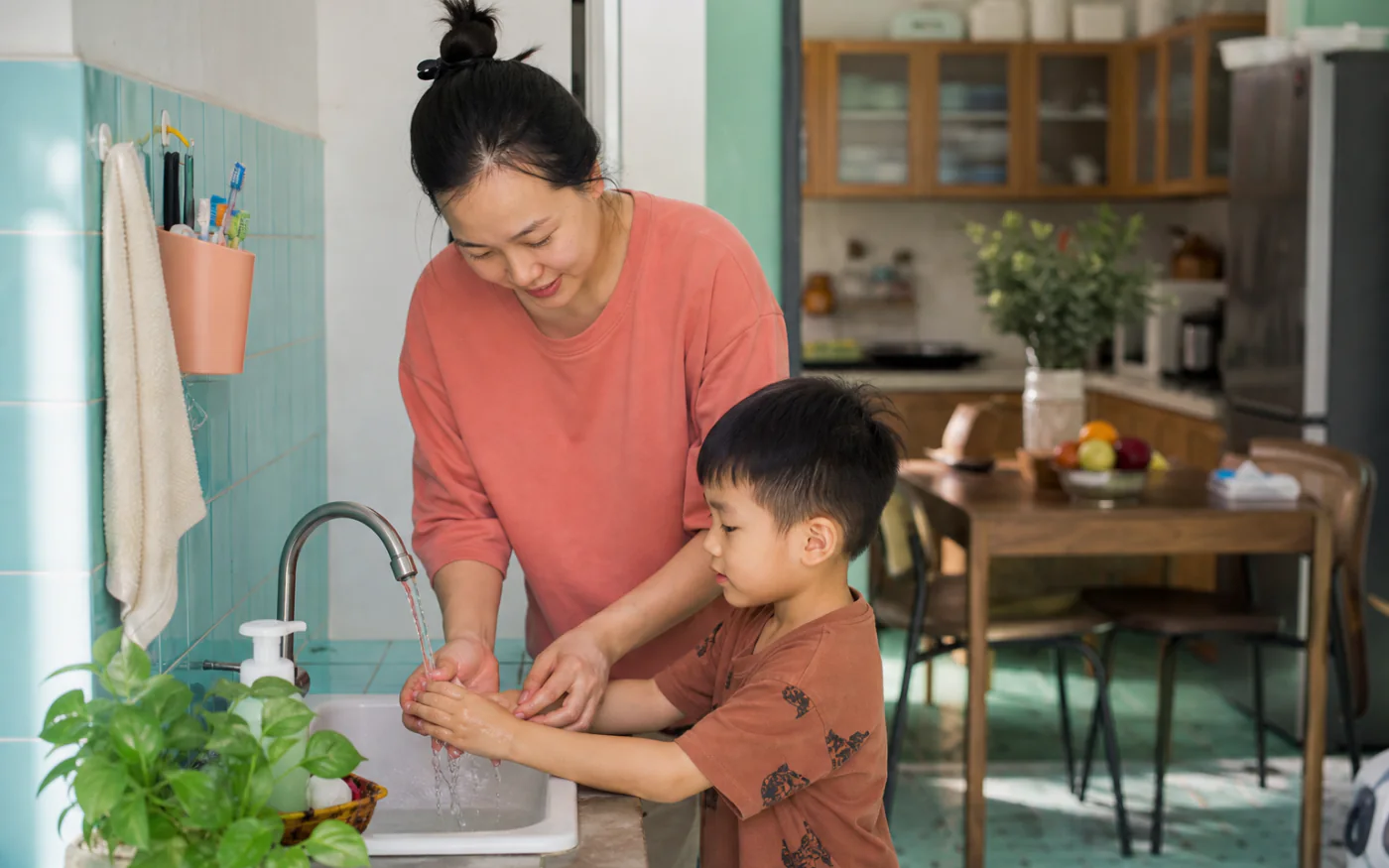
HCDC emphasises hand, food and environmental hygiene to reduce transmission. Wash hands with soap after nappies or toileting and before food preparation, and clean frequently handled objects according to product instructions. Keep personal items separate where possible and inform childcare so its response plan can begin. Do not mix cleaning chemicals or leave prepared solutions accessible to children.
Commonly overlooked moments include an adult's hands after toileting help, a phone used during care and toys moving between children. NIMO suggests a designated place for items awaiting cleaning and an assigned adult rather than a demand to disinfect everything continuously. Do not blame the toddler for mouthing or mess. Adults organise the environment and support age-appropriate habits.
Follow-up and childcare return are separate questions
Follow the treating service's review schedule, especially while fever or drinking difficulties continue. HCDC provides close-monitoring and time-away advice for its local context. Confirm return arrangements with the clinic, childcare and applicable health instructions. Dried spots or a day count from a foreign article are not sufficient by themselves. Warning signs always justify returning before the scheduled review.
As the child improves, resume food and play according to capacity and report new concerns. Recovery does not require a daily increase in portions or an immediate return to previous activity. A brief record can help the review end with clear next actions: what continues, what needs reporting and when to return. Gentle care and urgent recognition are not competing approaches; they are parts of the same plan.
Practical checklist
- Danger signs: call for help or seek care now, without completing a log first.
- Keep drinking, medication, follow-up and contact plans available for handover.
- Ask separately about childcare return under local instructions.
How NIMO built this guide
NIMO writes and localizes each guide for Vietnamese families, then checks key facts against the official references below. The links support the guide; they are not the guide itself.
General health information · Checked against official sourcesFor symptoms or treatment decisions, confirm with an appropriate health professional.Next review · Dec 5, 2026