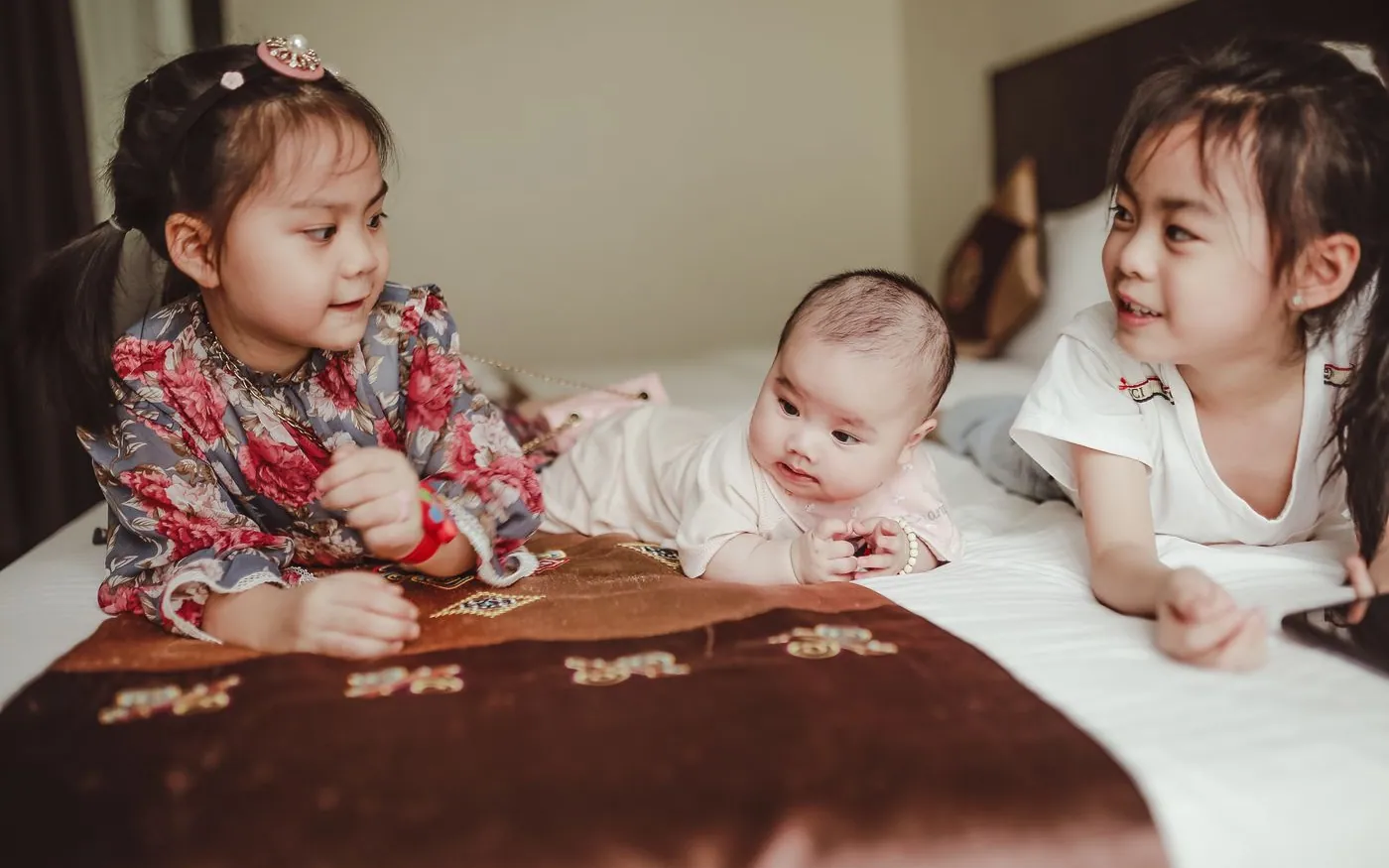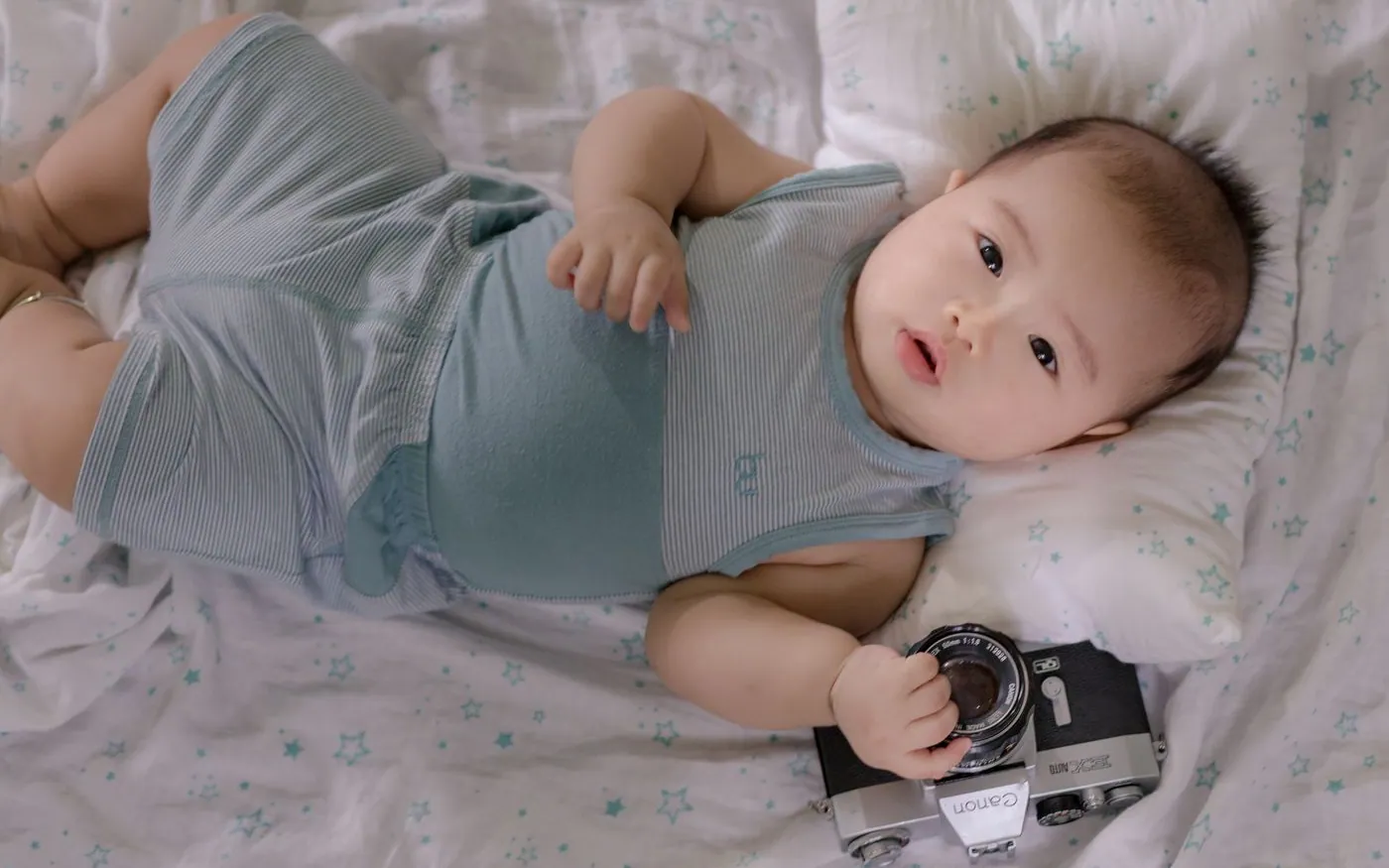
You do not need a lesson plan to play with a baby. Answering a coo, waiting for a hand to touch a book or offering something back and forth is a beginning. Toys change during the first year, but a useful approach remains: follow the baby's attention, offer a chance to try and stop when rest is needed. The stages below are invitations, not deadlines.
The short version
- 01
Good play leaves a turn for the baby, not just a performance by the adult.
- 02
Tummy time is for supervised awake time; sleep follows safe-sleep guidance.
- 03
Use current abilities; developmental concerns call for discussion, not simply more drills.
Jump to the part you need
Early months: make room for faces
When the baby is awake and comfortable, settle nearby where they can see your face. Say something short, then wait; respond to a sound or expression rather than narrating continuously. UNICEF describes back-and-forth interaction as support for early communication. You do not need to produce a smile on demand. Looking away or becoming quiet can be a reason to reduce stimulation.
Try NIMO's morning greeting: say hello, pause, then gently echo a sound the baby makes. A few interested exchanges are enough. Use language that feels natural rather than a script from an app. The meaningful part is listening and responding, not whether a song comes with an educational label. The same little exchange can belong to any regular caregiver.
Floor play and tummy time are opportunities, not endurance tests
NICHD defines tummy time as time on the stomach while awake and watched. It supports muscle and movement practice, but is not a sleep position. Clear a firm floor area of small objects and elevated edges, and stay nearby at the baby's level. Begin with manageable short opportunities, building gradually and using individual guidance for medical conditions or prematurity.
Place a safe object nearby to invite looking or reaching, rather than moving it away every time success is close. If the baby tires, pick them up or change activities; there is no score to complete. If they become sleepy, move them to their appropriate sleep space on their back. A manageable opportunity can be repeated without turning floor time into a struggle.
When reaching emerges: offer one thing to explore
As reaching and grasping develop, a durable cloth book or age-appropriate toy may be enough for one exchange. Offer it where the baby can see and attempt to touch it. UNICEF suggests exploring books, textures and safe objects; you need not combine flashing lights, music and three rapidly changing toys. The baby may be interested in studying the one already in hand.
For a page-choice game, hold the book securely, describe one picture and wait for the baby to touch. If mouthing is likely, use an intact item designed for that age; an older sibling's book with detachable pieces is not automatically suitable. This is not a quiz about animal names. Reading together can mean spending a long time with a single picture.
Midyear: sounds, objects and a turn of their own
As posture and handling improve, offer a sturdy bowl or large toy without small parts, under supervision. Make one quiet tapping sound, stop and see whether the baby wants a turn. You need not move their hands to produce the correct rhythm. If they rotate the bowl to examine the underside, that is the current interest, not a failure to follow the game.
Change one feature at a time: use the same bowl with a large safe object, or describe in and out as you demonstrate. Avoid assuming a homemade sensory bottle filled with small pieces is harmless; a failed closure can create a hazard. Household objects are appropriate only when their material, durability and construction suit what this baby will actually do with them.
Later in the year: find, offer, fill and empty
UNICEF suggests finding hidden objects and responding to gestures. Partly cover a large toy with a cloth you hold, ask where it went and let the baby search if interested; remove the cloth afterward. When an object is offered, receive and return it rather than always taking it away. Small actions can create an exchange in which the baby genuinely participates.
Choose around existing skills rather than forcing standing or walking to match another child's activity. A baby with movement limitations may choose through gaze, an appropriately supported touch or a sound. Ask the child's professional about positioning or equipment adaptations when needed. Participation is the aim, not producing an identical movement in every infant or making a video look like a milestone demonstration.
Do not turn play into the household's work schedule
WHO prioritizes movement and interaction over prolonged passive screen or restrained time. That does not require constant organized entertainment. A safe floor area, a few suitable objects and an attentive person can be enough. Sleep, feeding and rest are not interruptions to a learning programme. They are part of a baby's day, and play should fit around them rather than compete with them.
When a caregiver is tired, choose voice play or looking at a book instead of an elaborate setup. Different caregivers can have small familiar routines: a song during changing, a sound exchange after a nap. Nobody needs to complete every idea in this article in one day. A play library is useful because it offers choices, not because it creates more obligations.
Notice the baby without turning them into a project
Disliking one game today does not establish a developmental delay. But concerns about hearing, vision, movement, interaction or lost skills deserve discussion with a clinician, not simply more exercises. Bring everyday examples: what the baby usually does, what changed and in which circumstances. You do not need a perfect video to ask for help or to explain why something feels different.
The useful thing to carry from the first year is not the number of toy sets completed, but a better understanding of how this baby invites you in: a look, a sound, an offered object. Play need not have a measurable outcome to matter. Recognizing the invitation and answering it gives you something to discover together in the home you already have.
Practical checklist
- Clear a floor area and choose one suitable object.
- Try one conversational turn, then wait.
- Take specific concerns to a consultation rather than adding drills.
From the guide to your next step
How NIMO built this guide
NIMO writes and localizes each guide for Vietnamese families, then checks key facts against the official references below. The links support the guide; they are not the guide itself.
General health information · Checked against official sourcesFor symptoms or treatment decisions, confirm with an appropriate health professional.Next review · Dec 5, 2026