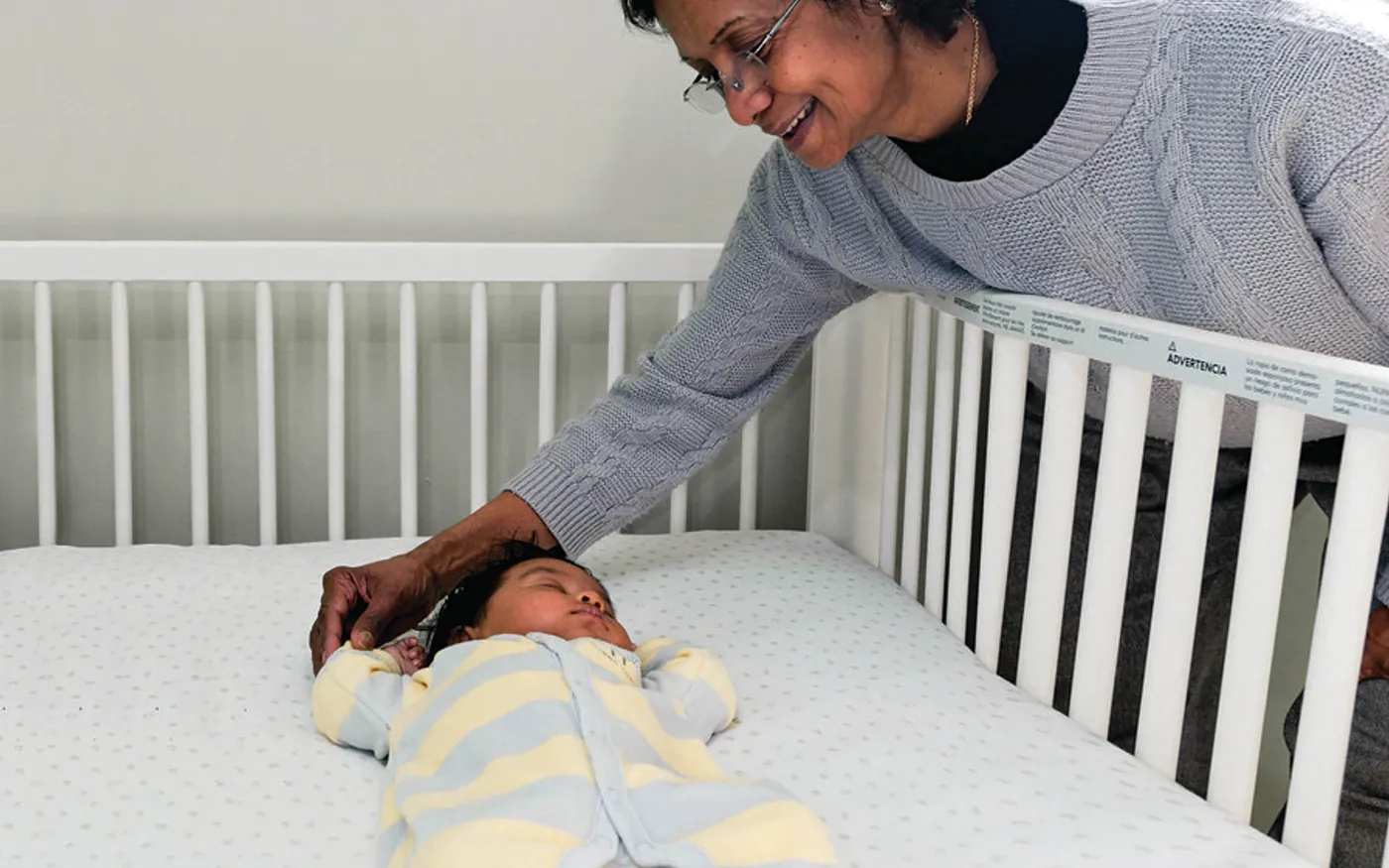
Place your baby on their back for every sleep, on a separate, firm, flat infant sleep surface without loose soft objects. That foundation applies to naps and visits to relatives too. If the baby is unresponsive or not breathing normally, call emergency services and follow resuscitation instructions; do not adjust pillows and wait. The rest of this guide is about preparing before exhaustion makes decisions harder.
The short version
- 01
Back, firm and flat, separate and clear applies by day and night.
- 02
Room-sharing is not bed-sharing; plan for caregiver sleepiness.
- 03
Monitors and SIDS-prevention marketing do not replace a safe sleep environment.
Jump to the part you need
One rule whenever you put the baby down
AAP recommends back placement throughout the first year, including for ordinary reflux. Do not independently tilt the mattress or use side sleeping to prevent choking. An incline can allow sliding and head slumping rather than solve a feeding problem. For a special medical condition, obtain explicit home instructions instead of copying a position seen in a monitored hospital setting.
NIMO suggests a shared sentence: Every sleep begins on the back in the baby's own sleep space. Use it for a grandparent's afternoon, the evening at home and a weekend away. Avoid treating a quick doze as an exception to the real sleep rules. Show a new caregiver the actual setup rather than simply mentioning that a cot exists somewhere in the home.
The sleep surface is a complete setup
CPSC and NICHD emphasize a firm, flat surface and fitted sheet, without pillows, loose blankets, bumpers or toys. Use the mattress intended for the product; do not add padding to soften it or fill a mismatch. Follow the cot or bassinet instructions and use limits. A breathable label does not make a head positioner or soft nest necessary or suitable for sleep.
Consider the reachable surroundings too: charger leads, blind cords and hanging items must stay out of reach. If mosquito protection is needed, use an appropriately installed solution that cannot drop fabric or cords into the sleep space; do not improvise a draped cot cover. An uncluttered mattress beside a reachable cord still needs attention. Safety does not end at the mattress edge.
Same room, separate space
AAP and NICHD recommend sharing the caregiver's room, with a separate infant sleep space, for at least the first six months. This keeps the baby nearby without placing them in an adult bed. Shared surfaces add risks from bedding, people and gaps; a soft nest on the adult mattress does not create a separate cot. Someone lying nearby cannot make every arrangement safe.
In a small home, the problem is fitting a suitable infant sleep product near the caregiver, not building an entire nursery. Sketch the route from your bed: must you step over bags, reach across wires or carry the baby around awkward furniture? Reducing those obstacles makes the separate space easier to use, rather than letting it become a storage area nobody reaches at night.
Exhaustion needs a plan, not willpower
Falling asleep with a baby on a sofa or armchair is particularly dangerous. Alcohol, sedating medicine, smoking and extreme fatigue make shared sleep still riskier; do not stop essential medicine yourself, but seek help arranging care. If you are drifting off while holding the baby, place them in the safe sleep space and get another caregiver's help if available.
NICHD advises clearing soft items before feeding in bed if accidental sleep is possible, then returning the baby to the separate space as soon as you wake. This harm-reduction step does not make bed-sharing safe. A household can assign the awake caregiver the post-feed transfer. If staying awake is repeatedly impossible, tell the care team honestly so the practical problem can be addressed.
What changes when rolling begins?
Continue placing the baby on the back initially. AAP explains that once comfortable rolling both ways, the baby generally need not be repeatedly turned back, but the sleep space must stay clear. Stop swaddling when attempts to roll appear, not at a fixed calendar deadline. Do not restrain movement with pillows, straps or weighted items. Ask the clinician if you are unsure how this applies.
The transition may make some sleeps harder. That does not mean returning to a method that holds the baby still. Separate two questions: how can we soothe this baby, and where can this baby safely sleep? Soothing can change while the safety foundation remains. Supervised awake tummy time is a separate activity, not practice for becoming accustomed to stomach sleeping.
Heat, devices and reassuring promises
Notice a hot chest, sweating or excessive layers and adjust to avoid overheating. Do not copy a room-temperature number from another country as the sole safety test. If using a sleep sack, choose an appropriate fit without added weight and follow its instructions; do not add a weighted blanket. Fit and actual room conditions matter more than the word summer on a label.
FDA warns against relying on products claiming to prevent SIDS. A monitor cannot replace a suitable sleep surface or guarantee recognition of every danger. A device prescribed for a particular condition is a different matter: follow the treatment plan and ask how it fits safe sleep. Do not discard prescribed medical equipment because a general article recommends fewer products.
Take the principle with you
A car seat protects during travel; it is not a substitute cot at home. If the baby sleeps in sitting equipment, a swing or carrier, transfer to an appropriate sleep surface as soon as it can be done safely. Before visiting relatives, ask about the sleep arrangement rather than bringing only a familiar blanket. A brief nap in a new place still needs planning.
Walk through a handover: show the sleep space, remove unnecessary items and agree who takes over when the person holding the baby becomes sleepy. No arrangement guarantees zero risk; guidance reduces risk, not grounds for blaming families. Repeating a few practical choices across every sleep makes a safety plan compatible with ordinary, sometimes exhausting life.
Practical checklist
- Show every caregiver the same prepared sleep space.
- Remove soft objects and reachable cords.
- Agree on a handover when the holding caregiver becomes sleepy.
From the guide to your next step
How NIMO built this guide
NIMO writes and localizes each guide for Vietnamese families, then checks key facts against the official references below. The links support the guide; they are not the guide itself.
General health information · Checked against official sourcesFor symptoms or treatment decisions, confirm with an appropriate health professional.Next review · Dec 5, 2026